
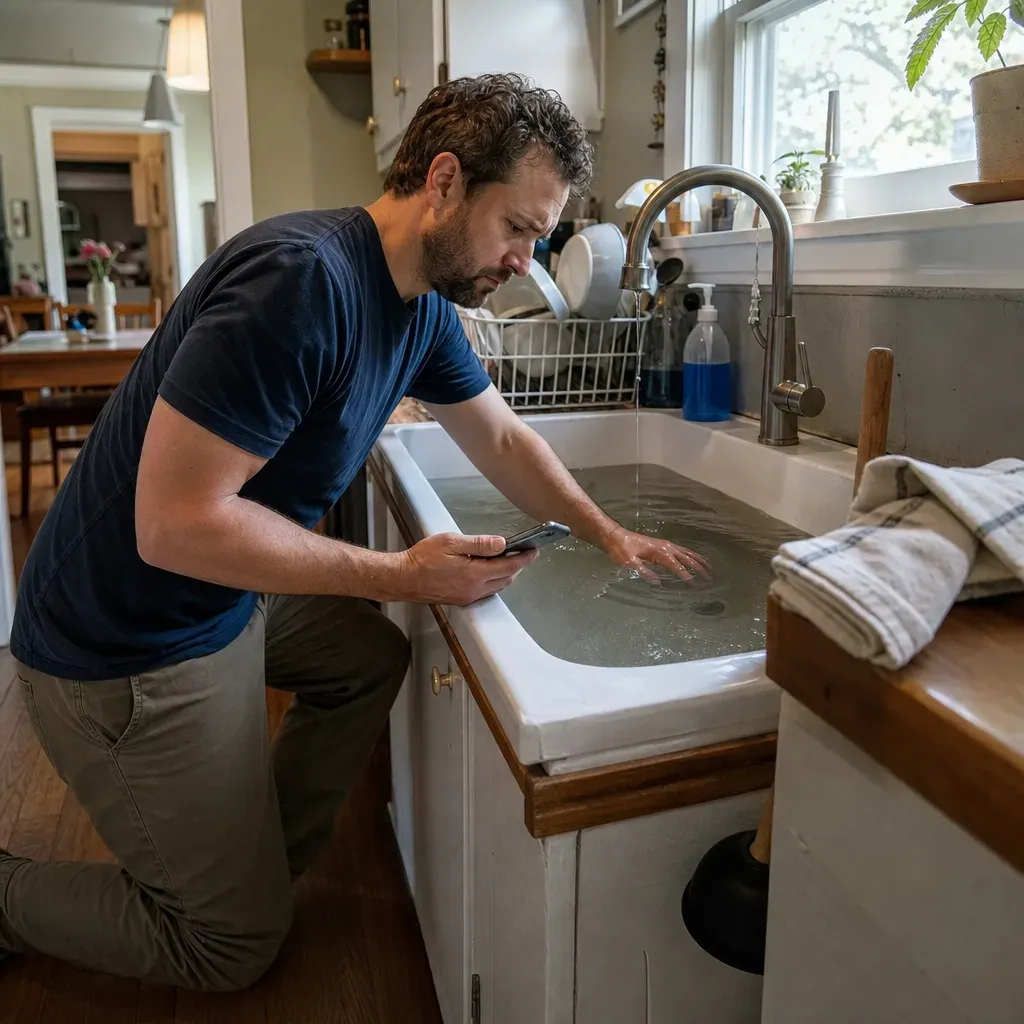
How Much Does Drain Cleaning Cost in Portland?
What actually moves the price, and how to tell a quick clog from a bigger job. Licensed, insured, and available 24/7.
- Licensed & Insured, CCB# 249970
- Available 24/7, nights and weekends
- Upfront pricing
- 10% off for Military, First Responders & Seniors
Need a drain cleared in Portland?
Straight answers and upfront pricing, any hour of the day.
Available 24/7 · Licensed & Insured · CCB# 249970
What Drives Drain Cleaning Cost
Drain cleaning cost comes down to four things: where the clog sits, what is causing it, how easy the line is to reach, and whether the job needs a camera or a cable. A kitchen sink clog and a root-packed main line are different jobs. Knowing which one you have tells you most of what you need to know about the quote.
People ask how much drain cleaning costs almost every day, and the honest answer starts with a question back. Where is the water backing up? A single slow bathroom sink is one job. A main line backing up into a basement floor drain is another. Same trade, very different work.
Here is what moves the number:
- Location of the clog. A trap under a sink is a few feet of pipe. A main sewer line runs under your yard and can stretch 60 feet or more to the street.
- What is blocking it. Grease and hair come out fast. Tree roots, scale buildup, and collapsed sections take longer and sometimes need different equipment.
- Access to the line. An accessible cleanout makes the job easier. No cleanout can mean pulling a toilet or working from the roof vent, which adds labor.
- Cable versus hydro-jetting. A cable punches through a clog. Jetting scours the pipe walls clean. Jetting takes more setup and more time.
- Whether a camera inspection is needed. If a line clogs again soon after cleaning, you need eyes inside the pipe, not another cable run.
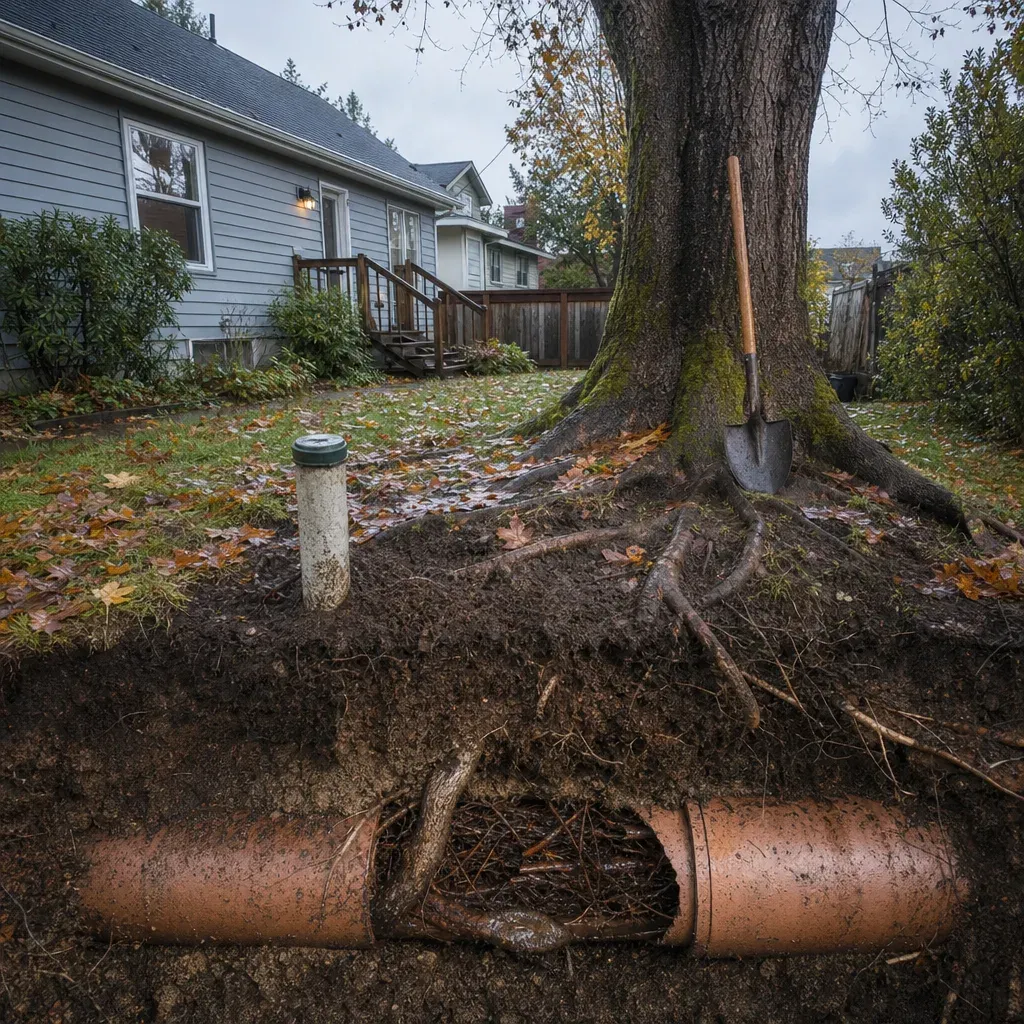
Portland adds its own wrinkles. A lot of homes in neighborhoods like Laurelhurst, Irvington, and Sellwood still have original cast iron or clay sewer laterals. Clay joints and big old trees are a bad combination. Roots find the smallest gap and keep growing. We pull root balls out of century-old lines all the time, and those jobs take longer than a hair clog in a 1990s build.
Most people do not realize this until the second backup: repeat clogs usually are not a cleaning problem. They are a pipe problem.
We had a customer in Southeast Portland who had paid three different companies to cable the same line over two years. Nobody ran a camera. It turned out a section of clay pipe had dropped about an inch, and every clog was collecting right there. Three cleanings bought her nothing. One camera run would have told her the truth the first time.
Snaking vs. Hydro-Jetting vs. Camera Inspection
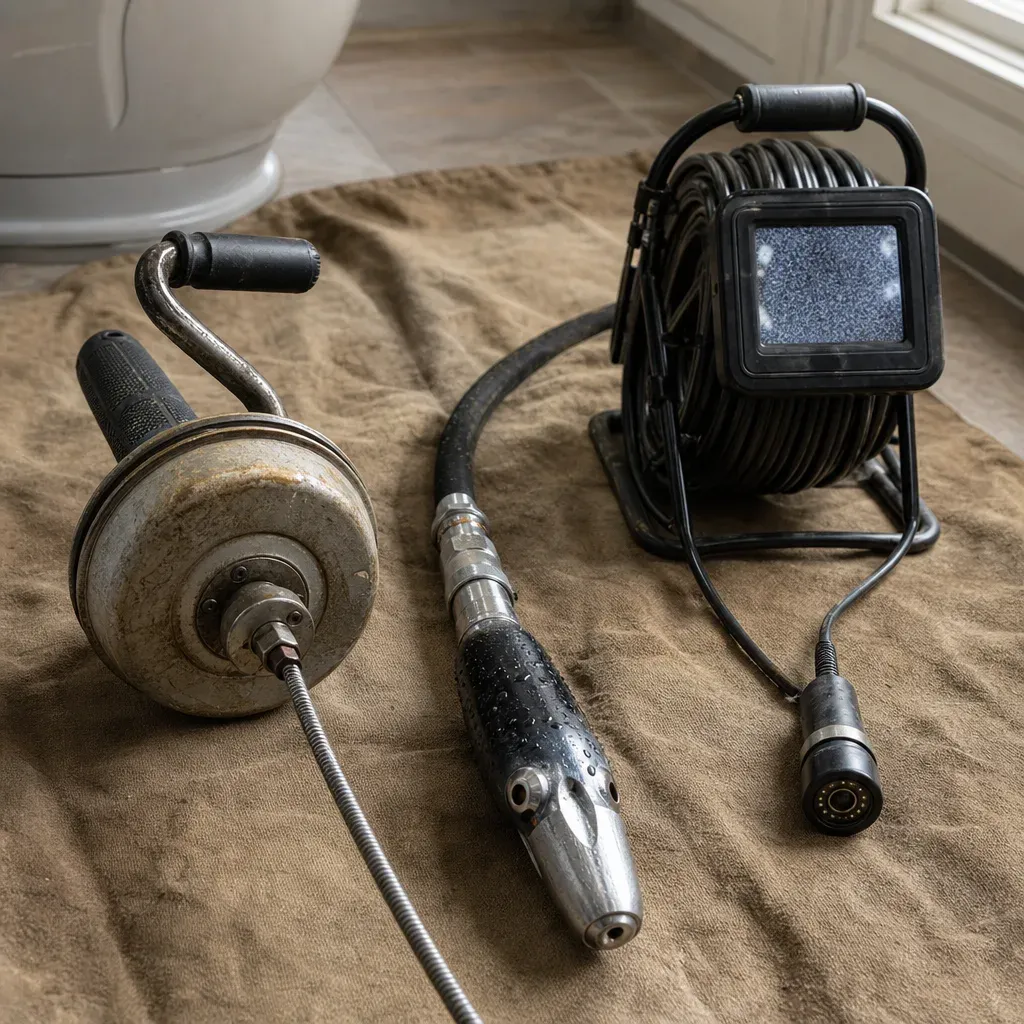
Three methods handle almost every clog: snaking, hydro-jetting, and camera inspection. They are not interchangeable, and the method changes the cost, so knowing what each one does helps you understand the number you are quoted.
Snaking is the workhorse. It is fast and simple, and for many sink and tub clogs it clears the path the same day. But snaking punches a hole through the clog. It does not always clean the pipe wall, so a line coated in grease before is still coated after, just with a channel through it.
Hydro-jetting uses high-pressure water to strip the pipe walls back toward bare pipe. It takes longer than snaking, but the line tends to stay clear longer too. We break down when each one makes sense in Is Hydro-Jetting Better Than Snaking?
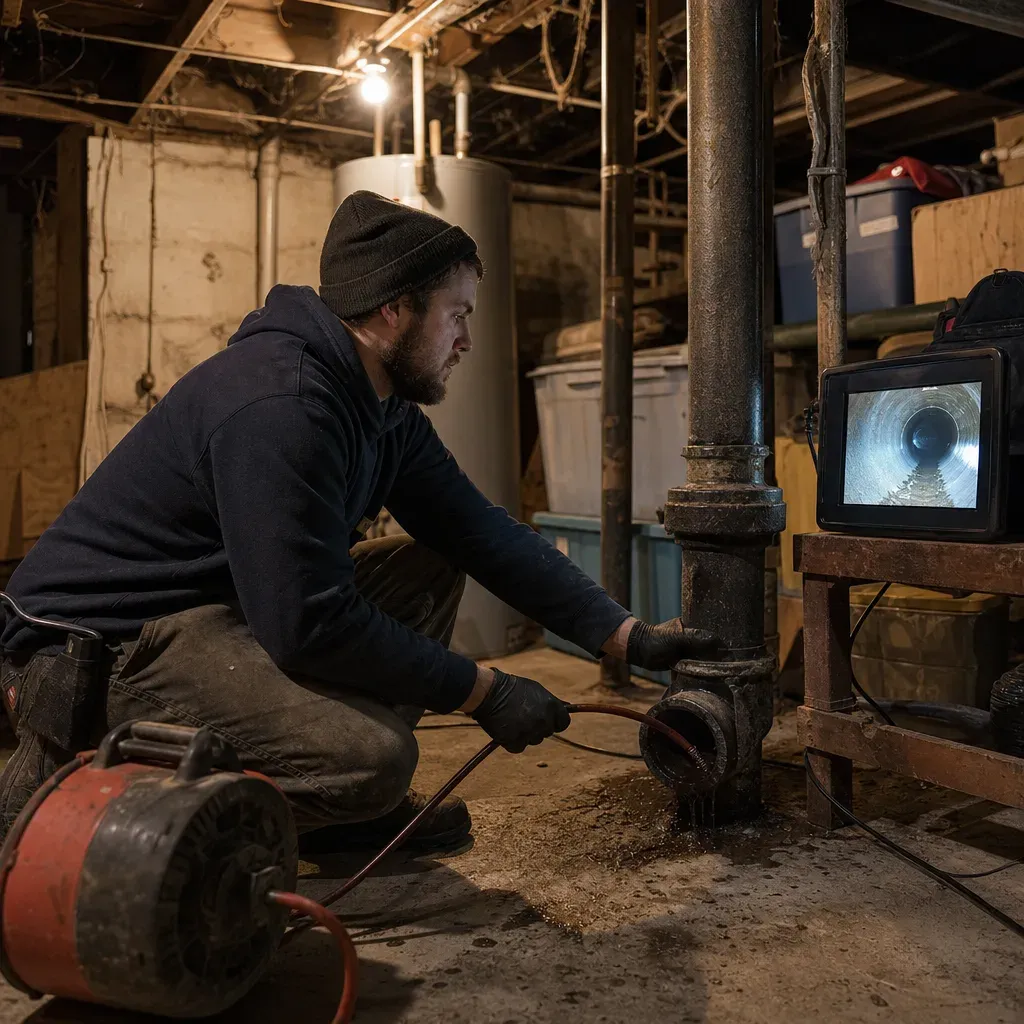
A camera inspection does not clear anything. It shows what is really in the line: roots, a cracked joint, a sagging section, or buildup. Plenty of jobs use two methods together, like a camera first to find the issue and then jetting to clean it, and that combination is often why one quote covers more work than another.
We ran a camera on a Southeast Portland main line last winter after the owner had it snaked twice in six months. Roots had pushed through a joint about 30 feet out. No amount of cabling was going to fix that. Finding it in twenty minutes saved him from paying for a third clearing that also would not have held.
Ask what method a quote includes. An honest plumber will tell you straight, and explain why they picked it.
- Snaking (cabling): best for a single slow sink, a clogged tub, or a toilet that will not clear.
- Hydro-jetting: best for grease buildup, heavy scale, or a line that keeps backing up after snaking.
- Camera inspection: best when the problem keeps coming back or you suspect roots or a broken pipe.
Why the Same Clog Can Mean Two Different Jobs
Two neighbors can call on the same morning with the same complaint, a kitchen sink that will not drain. One job takes 30 minutes with a hand auger. The other turns into a two-hour visit with a camera and a jetter. A clog is a symptom. The real work is figuring out what is causing it and how far down it sits.
The simplest way to think about it: the farther the blockage sits from the drain opening, and the harder the material is to break up, the bigger the job. A wad of hair in a bathroom trap is close and soft. Grease packed into 40 feet of cast iron is neither.
How many fixtures are affected matters more than most people realize. If your toilet bubbles when the washer drains, that is not a toilet problem. That points to the main line.
Here is a real example from a house up in the Hollywood district. The customer called about a slow tub. Classic hair clog, right? We ran a small auger and it cleared for about a day. Then everything backed up again. A camera showed roots pushing through a clay joint near the sidewalk. The tub was never the problem. It was just the lowest fixture that showed the symptom first.
Older sewer lines add their own trouble. A lot of homes in neighborhoods like Laurelhurst, Irvington, and Sellwood still have original cast iron or clay sewer lines, and mature trees are common in Portland yards. Roots can work into a small gap at a pipe joint and keep growing. The EPA lists root intrusion through pipe defects as a known cause of sewer blockages.
This is why an honest plumber will not quote a hard number over the phone without knowing what they are walking into. But you should not be in the dark either. Wild Pine Plumbing diagnoses first, then gives you a clear price for the work before it starts. If the scope changes mid-job, you hear about it right then, not on the invoice.
Frequently Asked Questions
How do I know if I need drain cleaning or a bigger repair?
Repeat clogs are the biggest sign you need more than a simple cleaning. If a drain backs up again within a few months, the pipe itself may be damaged, cracked, or full of roots. A camera inspection shows what is really going on inside the line, so you are not paying for cleanings that will not hold. Our Portland drain cleaning page walks through what a full diagnosis looks like.
Why do older Portland homes get more drain clogs?
Many older homes still have original clay or cast iron sewer lines. Clay pipe joints can have small gaps that tree roots grow into, and cast iron scales up on the inside over time, narrowing the pipe. Neighborhoods like Laurelhurst, Irvington, and Sellwood have large mature trees near old pipes, which makes root intrusion common, which leads to more frequent clogs than you would see in newer construction.
Can I clear a slow drain myself before calling a plumber?
You can try a plunger or a store-bought drain snake on a single slow sink. That works for simple clogs like hair or soap buildup near the surface. But if the clog keeps coming back, or more than one fixture is affected, a store-bought tool will not reach the real problem. That usually means the issue is deeper in the line and needs a professional look.
Does the type of clog affect how a plumber treats my drain?
Yes. Grease and hair often clear quickly with a cable. Tree roots, scale buildup, or a collapsed pipe section need heavier equipment like hydro-jetting, or a camera inspection first. Knowing what is blocking your line explains why one job takes longer than another, even when the symptoms look the same. See hydro-jetting vs. snaking for how the methods compare.
Ready to Get Started?
Upfront pricing. Honest work. Available 24/7 across Portland Metro.
Ask about our 10% discount for Military, First Responders & Seniors.