
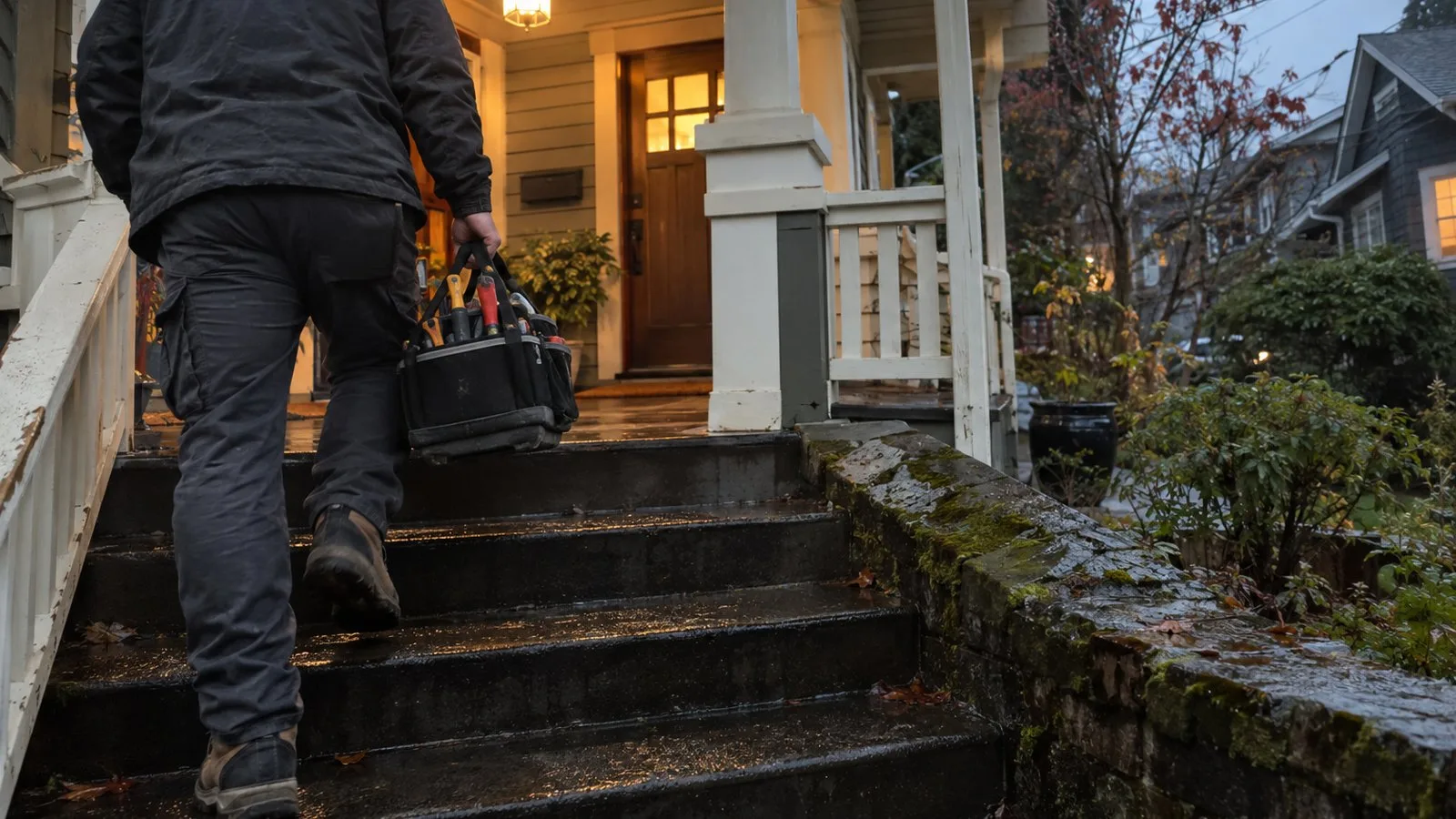
Emergency Plumber in Portland: Know When to Call Now
Honest plumbing for Portland Metro — licensed, insured, available 24/7
Decide If You Have a True Plumbing Emergency
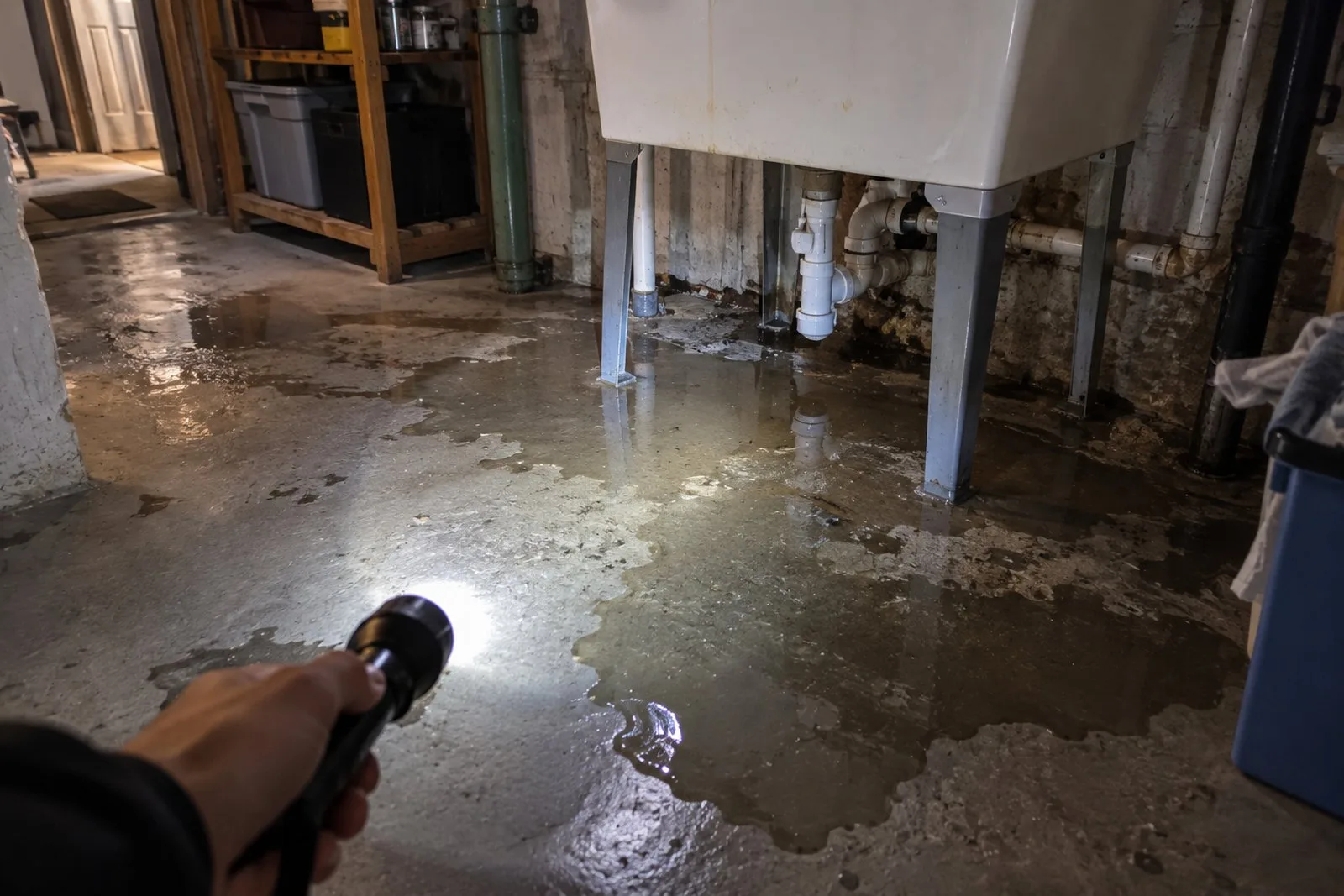
Not every plumbing problem needs an emergency plumber in Portland at your door at 2 a.m. Here's how to sort it out yourself, the same way we'd walk you through it if we were standing in your kitchen.
Call right away if any of these are happening:
- A pipe is spraying or pouring water and it won't stop.
- You can't find or close your main water shutoff, and water keeps coming.
- Water is dripping through a ceiling or soaking into a wall.
- Sewage is backing up into a tub, shower, or floor drain.
- Several drains back up at the same time, like the toilet gurgling when the washer drains.
- Your water heater is leaking from the tank itself, not just a fitting.
- You've lost all water to the house and your neighbors still have theirs.
These can't wait because water doesn't stay put. It soaks into drywall, subfloors, and insulation, and every hour adds to the cleanup. Sewage is worse. It's a health problem, not just a mess. When more than one drain backs up at once, the trouble is usually further down the line, often in the main sewer line, and running more water only makes it worse.
These can usually wait for a regular daytime visit:
- A dripping faucet.
- A toilet that keeps running, as long as you can turn off the valve behind it.
- One slow drain while the rest of the house drains fine.
- A small leak under a sink that stops when you close the shutoff valve under that sink.
- Water that isn't as hot as usual, with no leak anywhere.
That's the honest answer, even though it means fewer late-night calls for us. Many plumbing companies charge more for nights, weekends, and holidays. If you can safely hold off, a daytime appointment may cost you less. Either way, ask how a company prices after-hours work before anyone starts. For everyday repairs, see all our work as a plumber in Portland.
The middle ground comes down to one question: can you stop the water? If closing a fixture valve or the main shutoff stops the flow and nothing is getting wet, you have time to plan. If you can't stop it, or it's already reached a ceiling, a wall, or the floor, treat it as an emergency.
Here's a common example. You finish the dinner dishes, and the kitchen sink won't drain. A few minutes later, the downstairs toilet bubbles when the dishwasher runs. One clogged sink can wait. Two fixtures acting up together is a different story. Stop running water and get help that night.
We answer calls 24/7. If you can't tell which list your problem fits, call and tell us what you're seeing and hearing. That's often enough to tell whether you need someone now or first thing in the morning.
Common Plumbing Emergencies in Older Portland Homes
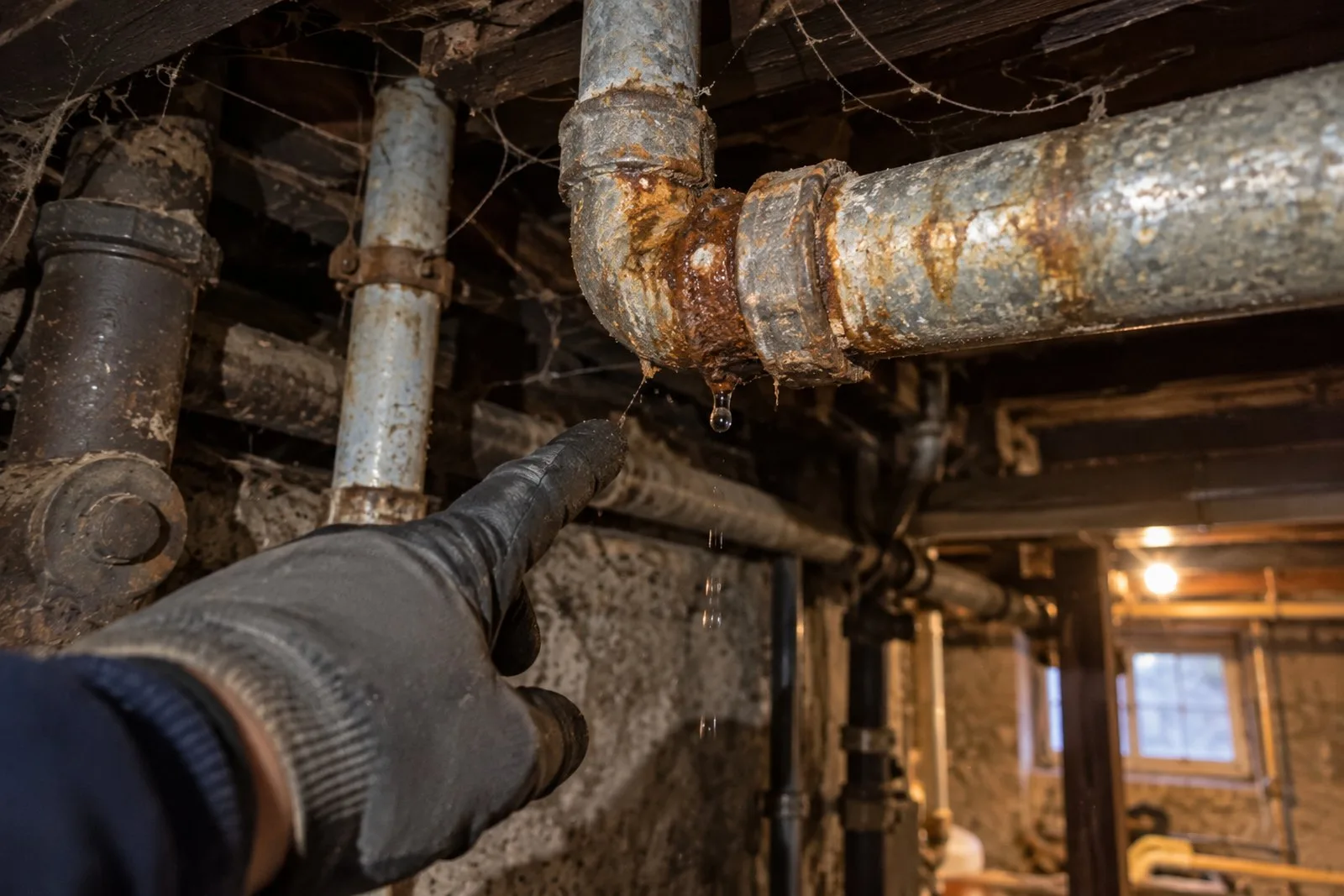
If your house has some years on it, your plumbing does too. Older homes were built with pipes and parts that wear out in their own ways. Knowing how they fail helps you spot trouble early, before it turns into a late-night call.
Here are the problems that tend to turn into emergencies in older homes.
- Galvanized steel water pipes. These pipes rust from the inside out. Long before they leak, you might notice weak water pressure, rusty or brown water when you first turn on a tap, or one faucet that barely flows. In the end, a threaded joint or a thin spot gives way, and that's when water starts spraying.
- Clay or cast iron sewer lines. Clay pipe comes in short sections, and tree roots love to push into the joints looking for water. Cast iron can crack, rust through, or sag over time. Either one can lead to a sewage backup, and it usually shows up first in the lowest drain in the house, like a basement floor drain or a tub.
- Old main shutoff valves. Many older homes still have valves that haven't been turned in years. When you finally need one, it may be stuck, or it may break off in your hand. A small leak gets a lot bigger when you can't shut the water off.
- Aging water service lines. The pipe that brings water from the street to your house is buried, so you won't see it fail. Watch for a soggy patch in the yard that never dries out, a sudden drop in water pressure, or a water bill that jumps for no clear reason.
Portland's big, old trees and long rainy season make root trouble in sewer lines worth watching for. Roots go where the water is. A clay line with tiny gaps at the joints gives them an easy way in. A slow drain that keeps coming back after you clear it can be an early sign.
In an old house, the emergency itself is only half the job. Yes, we stop the water and get things working again. But if one galvanized fitting just burst, the pipe next to it may be just as worn. If roots blocked the sewer line, clearing them buys you time, but it doesn't fix the gap they came through. We'd rather tell you what we found than leave you with a patch that fails again next month.
That's why we diagnose the problem before we quote. For sewer lines, we can run a camera down the line so you see the crack, root, or sag for yourself. If the whole line is done, trenchless replacement may let us replace it without digging up your whole yard. If your water pipes are failing all over the house, a repipe with PEX or copper may make more sense than chasing one leak after another. For buried service lines, we handle water main repair and the digging that comes with it.
You'll get an upfront, honest quote before any work starts, with the quick fix and the long-term fix laid out side by side. Then the choice is yours. Some folks need tonight's leak stopped and nothing more for now. Others want it handled for good. Either way, you'll know exactly what you're dealing with.
What to Do in the First 10 Minutes
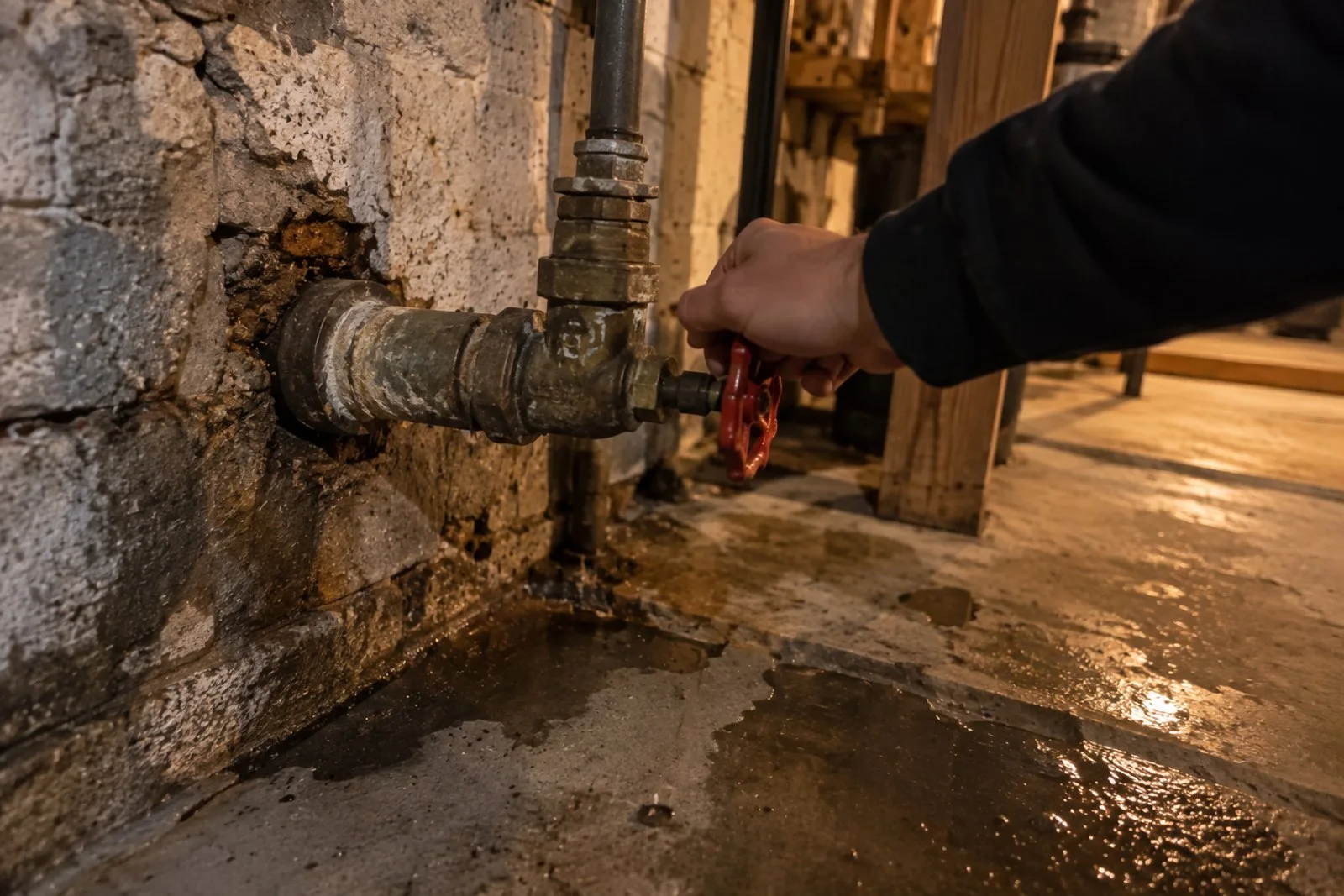
What you do in the first few minutes matters more than anything else. You can't fix a burst pipe tonight, but you can keep a bad night from turning into a much worse one. Work through these steps in order.
- Stop the water at the closest valve. If the leak is at a sink or toilet, turn the small valve under the sink or behind the toilet clockwise until it stops. That shuts off just that fixture and keeps the rest of the house running.
- If that doesn't work, shut off the main. Most homes have a main shutoff where the water line comes into the house, often in a basement, crawlspace, or garage. Some homes rely on the valve at the meter box near the street. Turn it clockwise until it stops. If it's stuck, don't force it with a wrench until it snaps. Call and tell us, and we'll talk you through it.
- Drain what's left in the pipes. Once the main is off, open a faucet on the lowest floor. That lets the water already in the pipes run out there instead of through your ceiling.
- Stay away from water and electricity together. If water is near outlets, a power strip, or your electrical panel, keep out of that area. Don't stand in water to flip a breaker.
- If the water heater is leaking, cut its supply. Close the cold water valve on top of the tank. For an electric heater, switch off its breaker if you can reach the panel safely and you're standing on dry ground. For a gas heater, turn the control knob to off.
- If sewage is backing up, stop all water use. That means no flushing, no showers, no dishwasher, and no laundry. Every gallon you send down has nowhere to go but back up. Tell everyone in the house, and keep kids and pets away from the mess.
- Skip the chemical drain cleaner. It won't clear a main line backup. It can also splash on you, or on whoever opens the line later.
- Protect your stuff. Move rugs, boxes, and electronics out of the wet area. Put towels down and use a bucket under a ceiling drip. If a ceiling is sagging with water, stay out from under it.
- Take a few photos. Get pictures of the leak, the wet areas, and anything damaged before you clean up. Your insurance company will likely want them.
Then call. We answer 24/7. It helps to have a few details ready: where the water is coming from, what you've already shut off, and whether more than one drain is acting up. That tells us what to bring and how fast you need us there.
Here's how it plays out. You hear water running inside a wall and see a wet spot spreading on the drywall. You can't reach the pipe, so you go straight to the main and shut it off. Then you open the laundry sink downstairs and move the couch away from the wall. Ten minutes later, the house is quiet and the damage has stopped growing. Now you're not fighting a flood. You're just waiting for a repair.
Thinking about Emergency Plumber? Let's talk.
Call (503) 594-4779. Wild Pine Plumbing is ready to help.
Verify Licensing Before You Hire Anyone
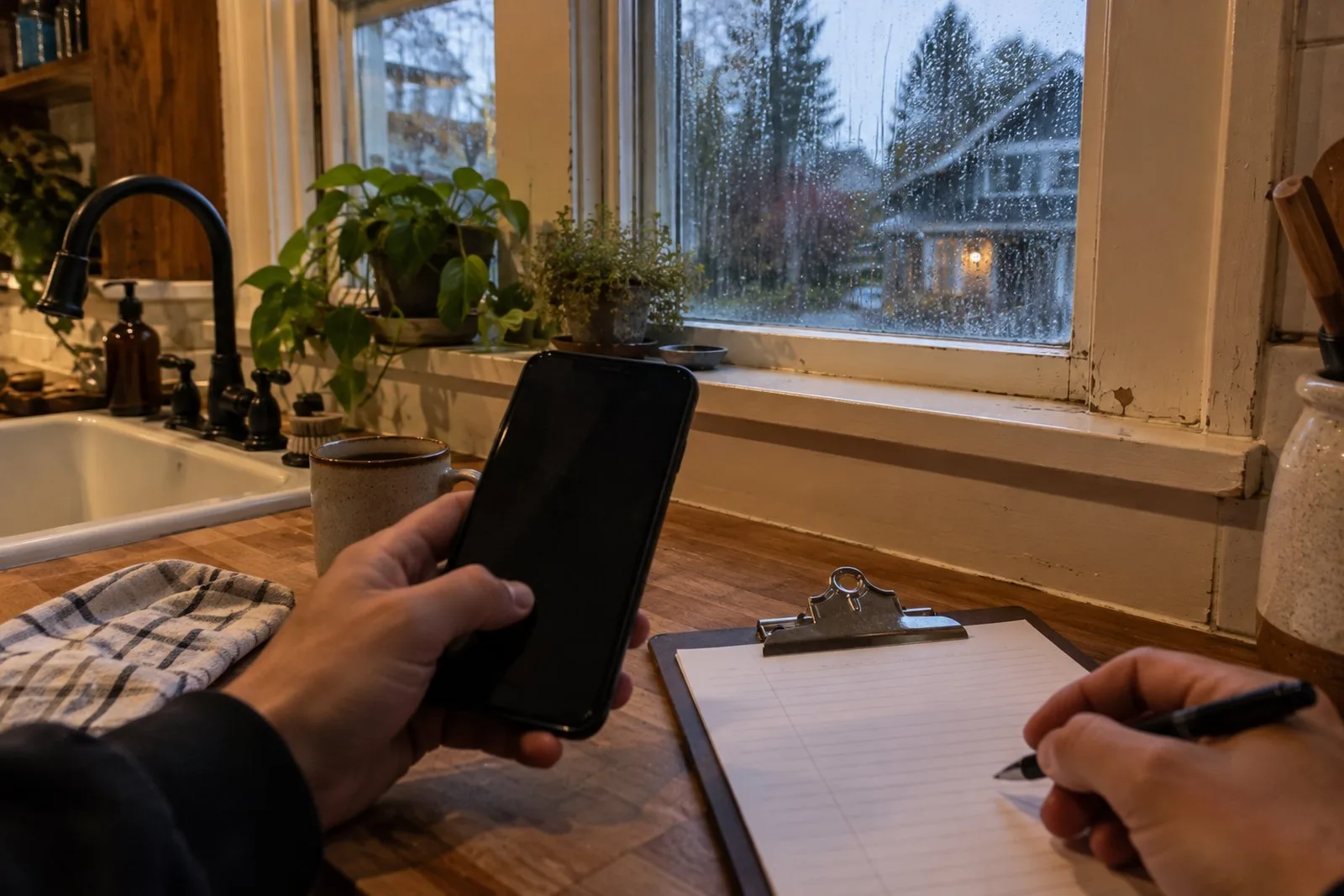
When water's on the floor, it's tempting to call the first number that picks up. Take two minutes to check the license first. In an emergency, you're letting someone cut into your pipes, and maybe your walls or your yard, often late at night. You want to know they're allowed to do that work and that you're covered if something goes wrong.
In Oregon, there are two things to check. The Construction Contractors Board, or CCB, licenses contractors. You can look up any CCB number online and see whether it's active. Plumbing also needs a license from the state Building Codes Division. That office licenses plumbing contractors and the plumbers who do the work. A CCB number alone doesn't mean someone can legally do your plumbing.
Ask these questions on the phone, before anyone shows up:
- What's your CCB number? Then look it up and make sure it says active.
- What's your plumbing contractor license number with the Building Codes Division?
- Are you insured and bonded?
- Will a licensed plumber be doing the work at my house?
- Will I get a price before you start? Ask how they charge for after-hours work, like we covered above.
- Will this job need a permit? Bigger jobs, like replacing a sewer line or a water heater, may need one.
This matters after the water's off, too. Insurance companies may ask who did the repair. A bond gives you somewhere to turn if a job is left unfinished. Permitted, inspected work also makes things easier when you sell your house someday. A cheap patch from someone without a license can cost you a lot more later.
Watch for these red flags:
- They won't give you a license number, or they dodge the question.
- They want cash only, or a big payment before any work starts.
- They push you to decide right now on a large job.
- The price changes once they're inside, and they can't tell you why.
Here's what you can check on us. Wild Pine Plumbing is licensed, insured, and bonded. Our Oregon CCB number is 249970, and it's active. Our Oregon Building Codes Division Plumbing Contractor license is PB3118. Our work is done by journeyman plumbers. We're a family-owned, locally owned business, and we've served Portland since 2015. Go ahead and look us up. We'd rather you check than wonder.
You'll get an upfront, honest quote before we start. If the fix turns into a bigger job, like a repipe or a new sewer line, we offer financing through Wisetack. We also give 10% off to military members, first responders, and seniors.
How Emergency Plumbing Calls Are Handled
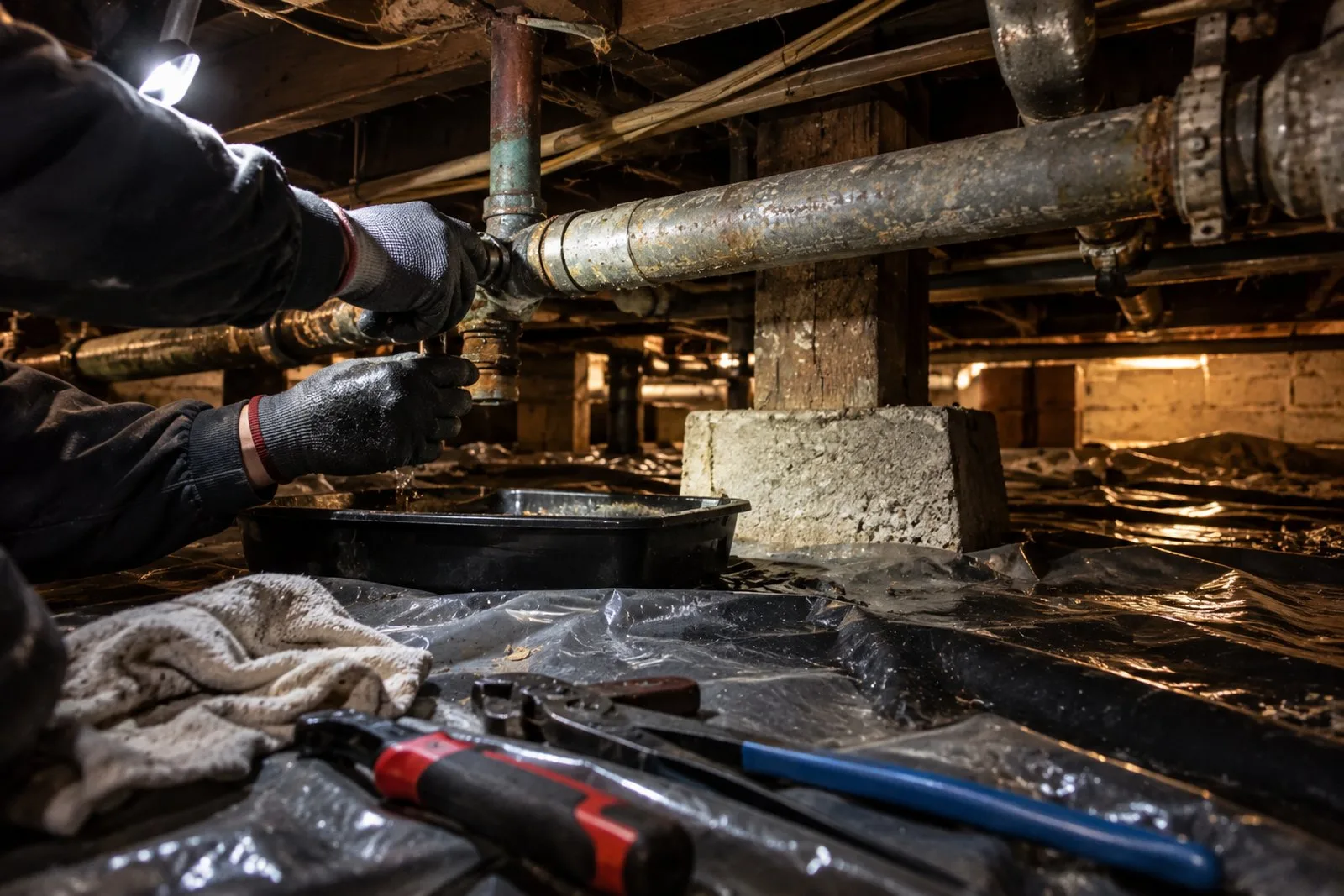
When you call us in an emergency, the job follows the same five steps every time. Here's what each one means for you.
- We answer. Day or night, your call gets picked up. You tell us what's going on, and we figure out together whether you need someone tonight or first thing in the morning.
- We find the real cause. Wet drywall is the symptom. The goal is to find out why, whether it's a split pipe, a failed fitting, or a blocked line farther out. A fast fix on the wrong spot just means another call next week.
- You get the price first. Before any work starts, you get an upfront, honest quote. Nothing gets cut, dug, or replaced until you say yes.
- We do the repair right. That means no shortcuts, even at 2 a.m. A clamp on a rotten pipe might hold for a while, but it isn't a real repair, and we'll tell you the difference.
- We follow up. After the job, we check back to make sure everything's still holding and you're taken care of.
Most of the stress in an emergency comes from not knowing. Not knowing what's wrong, how bad it is, or what it'll cost. Each of these steps is there to take one of those unknowns off the table.
Prices for emergency work aren't pulled out of thin air. A few things move the cost of almost any emergency plumbing job up or down:
- Time of day. Many companies charge more for nights, weekends, and holidays.
- How hard the problem is to reach. A leak under a sink is quick to get to. A pipe inside a finished wall, under a floor, or buried in the yard takes more time.
- Whether digging is needed. Buried water and sewer lines can mean excavation, and that adds labor.
- Parts and materials. A single fitting costs far less than a new section of pipe or a new water heater.
- Whether it's a stopgap or the full fix. Stopping the leak tonight and replacing the failed pipe later are two different jobs with two different prices.
- Permits. Some bigger repairs need a permit and an inspection.
Some emergencies end in one visit. A burst supply line gets replaced, the water goes back on, and you're done. Others happen in two steps. First the damage gets stopped and the house is made safe. Then the bigger repair, like a failing sewer line, gets planned and done properly. If a job needs that second step, you'll hear why and you'll see both prices before you choose.
One more thing to know. A plumber fixes the pipe. If a wall or ceiling had to be opened to reach it, patching the drywall and drying out the space are often separate jobs. Ask what's included in your quote so you know what's left when the plumbing's done. Your insurance company may also want to know who's handling the drying and repairs, which is where those photos you took come in handy.
An emergency doesn't have to come with surprises. You should know what's wrong, what it costs, and what's left to do before anyone picks up a tool.
Frequently Asked Questions
Common questions about Emergency Plumber
What are the most common plumbing problems that turn into emergencies?
The most common ones are clogged drains, burst pipes, leaking water heaters, and sewer backups. A single clogged kitchen sink is usually minor, but if a downstairs toilet starts gurgling at the same time, that points to a blockage further down the main line. Galvanized pipes and clay sewer lines in older homes tend to fail in these same ways over time, so catching the early signs matters.
My clogged sink won't drain even after plunging and hot water. Is that an emergency?
Usually not, as long as only one fixture is affected and nothing is overflowing. A single slow or clogged drain can typically wait for a regular appointment. It becomes urgent if other drains start backing up too, like a toilet bubbling when you run the dishwasher, since that often means the problem has moved into the main line.
Who do I call for non-emergency plumbing issues in Portland, like city sewer problems?
For issues with the city's sewer or water mains, contact the City of Portland directly through its non-emergency services line, since that covers public infrastructure rather than the plumbing inside your home. For anything on your side of the meter, from a slow drain to a water heater that's not heating right, call a licensed plumber and describe what you're seeing so they can tell you how soon it needs attention.
Ready to Get Started?
Upfront pricing. Honest work. Available 24/7 across Portland Metro.
Ask about our 10% discount for Military, First Responders & Seniors.