
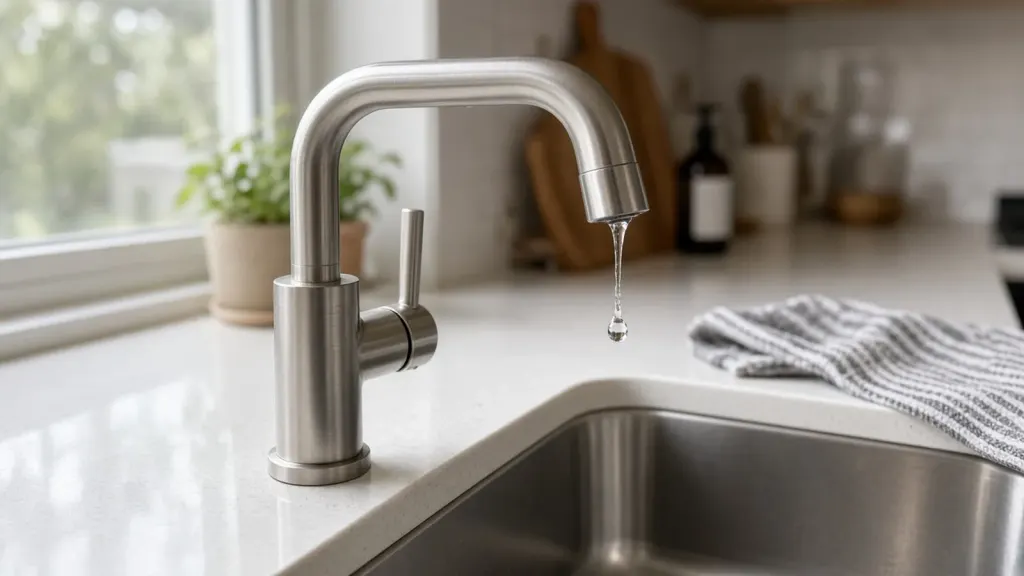
Faucet Repair in Portland, OR
Drip, stiff handle, or a puddle under the sink. Try the quick checks first. If you still need us, you get one price before any work starts.
Repair or Replace: How We Decide
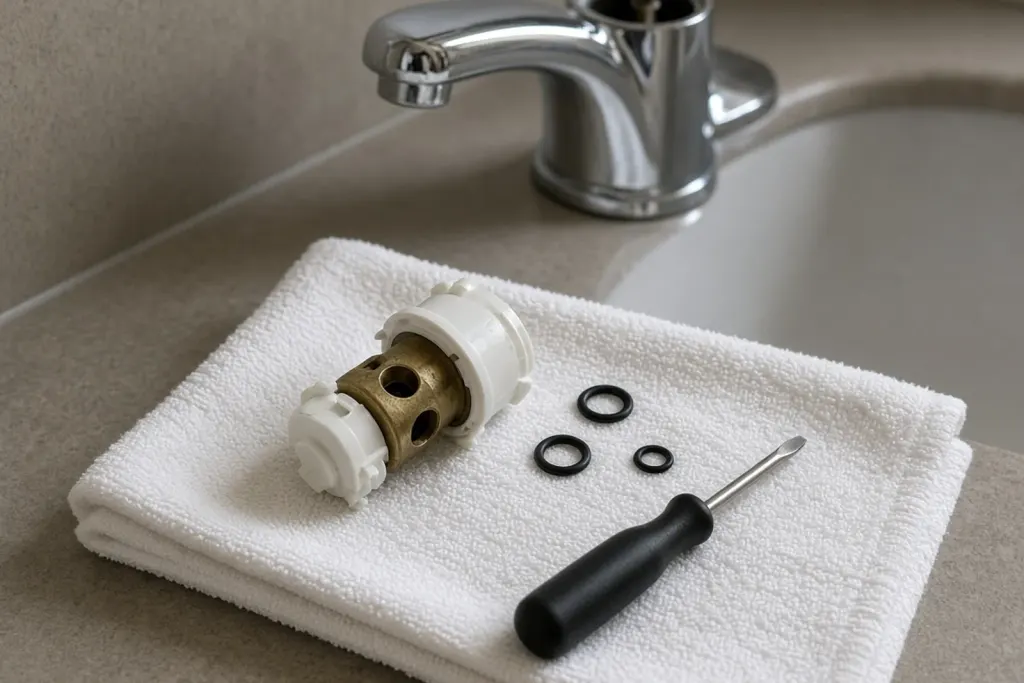
Most faucets with a drip or a loose handle can be repaired by swapping a worn cartridge, washer, or O-ring. Replacement makes sense when the body is cracked or corroded, parts are hard to find, or you already wanted an upgrade. We lay out both options with one price for each, and you decide.
A repair usually makes sense when the spout drips but the body looks solid, the handle is stiff or loose, water seeps around the handle base, you like the faucet, and parts for that model are still easy to get. Replacement starts to win when the body is cracked or corroded, the brand is discontinued, the same faucet has needed repeated repairs, heavy mineral buildup has chewed up the valve seat, or you want a different style such as a pull-down sprayer.
Cost mostly follows the failed part and how hard it is to reach. A common cartridge is a shorter job than an older fixture with seized stems. On a full replacement, the faucet you choose matters, and so do the shutoff valves under the sink. If those valves are old or will not close, swapping them with the faucet keeps you from putting a new fixture on parts that are about to fail.
You get one price before we start, and that is the price at the end of the job. Many times homeowners send photos of the faucet and the space under the sink first, so they already have a sense of each option before anyone arrives. We fix what you called about. If a repair will do, we say so. If replacement is the better move, we explain why in plain language, give you both prices, and leave the choice with you.
What Each Leak Usually Means
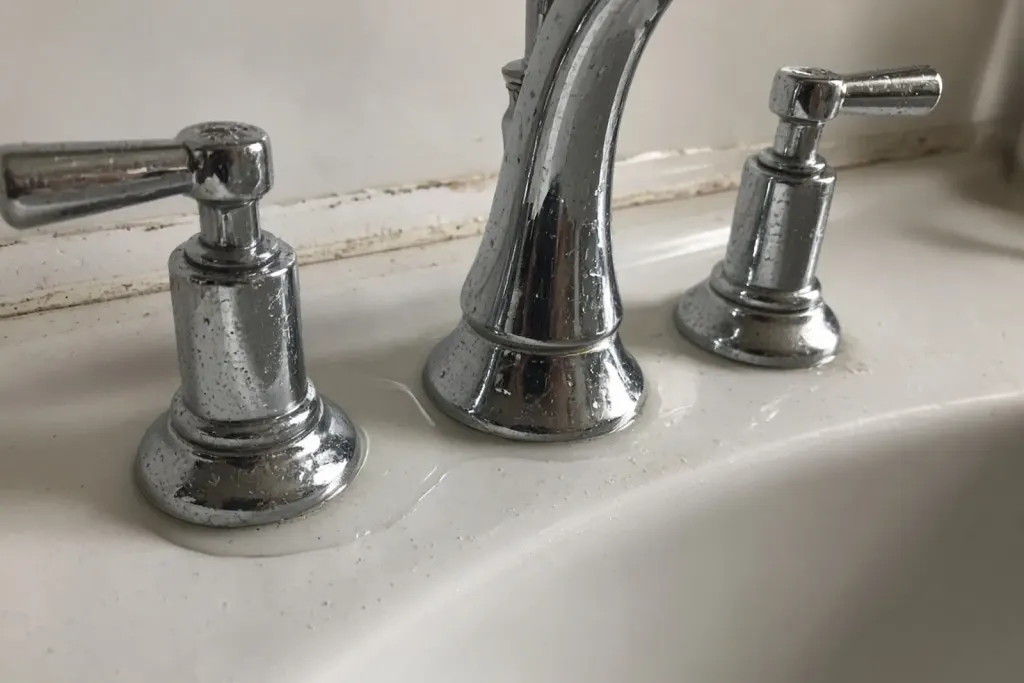
Where the water shows up points to the part that failed. A drip from the spout, a puddle around the handle, and a wet cabinet under the sink are three different problems.
- Drip from the spout after you turn it off: something inside is not sealing. On older two-handle faucets that is often a worn washer or a rough valve seat. On single-handle faucets it is usually the cartridge.
- Water around the handle or spout base: worn O-rings that no longer keep water inside the body.
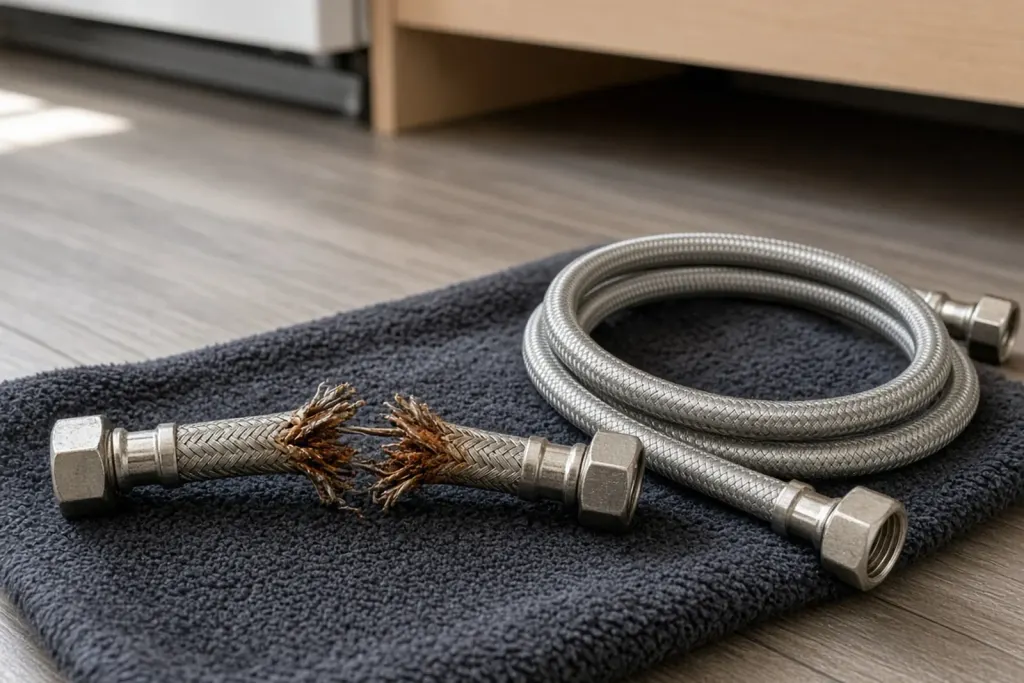
- Water under the sink: check the flexible supply lines first. A loose nut or a tired hose can drip for weeks before the cabinet floor warps or smells musty.
- Handle turns but water will not fully stop: a worn cartridge, or grit stuck in the valve.
- Weak flow or a sideways spray: often just the aerator screen at the tip of the spout, clogged with mineral bits. Portland's Bull Run supply is soft, but scale and debris still collect in aerators over time.
A slow drip is not an emergency, but it is not free either. EPA WaterSense notes that household leaks waste water, and a worn part that keeps grinding against the valve seat can turn a cheap seal into a bigger repair. Catching it early is how a small faucet job stays small.
Checks to Try Before You Call
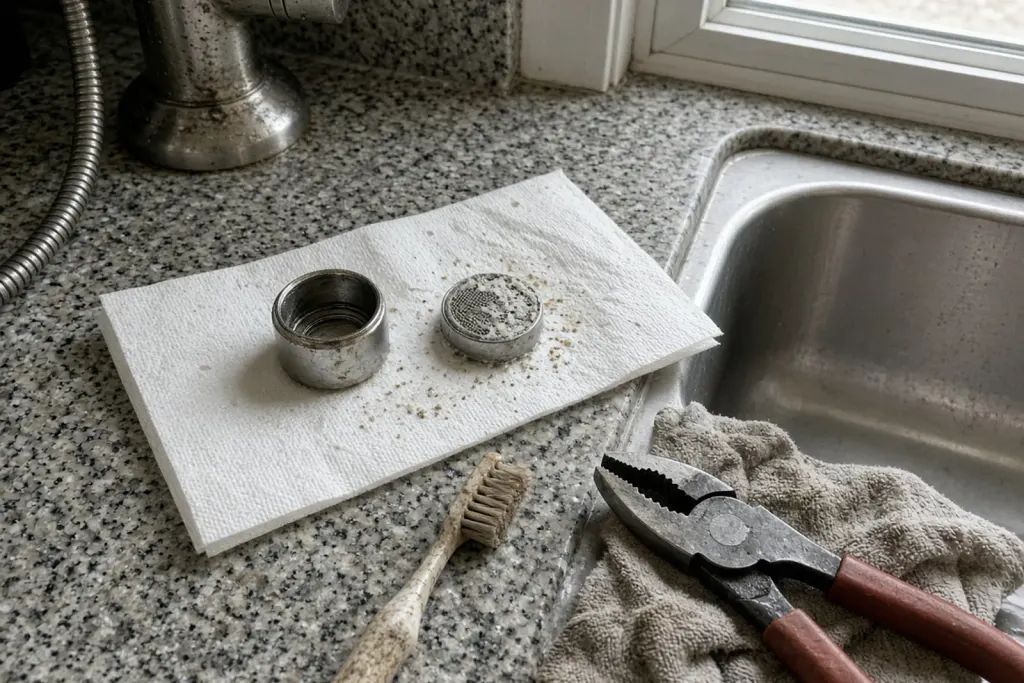
Some faucet problems take five minutes. If one of these fixes it, great, you do not need us.
- Confirm the handle is fully off. On a single-handle faucet, push the lever fully down and center it. On a two-handle set, turn each gently until it stops. Do not force it.
- Snug a loose handle. Look for a small screw under a decorative cap on top of the lever, then tighten it.
- Clean the aerator. Unscrew the tip of the spout (wrap pliers in a rag if needed), rinse the screen, scrub off white crust, and screw it back on.
- Test hot vs cold. Close only the hot shutoff under the sink. If the drip stops, the problem is on the hot side.
- Compare to the rest of the house. Weak flow at every fixture points past this faucet, often toward supply pressure or a regulator.
- Check the sprayer hose. Under a kitchen sink, a pull-down hose can kink on stored items.
While you are under there, take photos of the faucet face, any brand stamp, and the shutoff valves. Send those over and we can often price the repair before we come out.
Stop and call if the shutoffs are stuck or crusty, the cartridge will not budge without force, the body is cracked or corroded, the cabinet floor is soft or musty, or a DIY fix failed once already. Pushing past those points is how a small faucet repair becomes a bigger under-sink job.
Photos ready and still need a plumber?
Call (503) 594-4779. We answer 24 hours a day.
What Happens During a Faucet Repair Visit
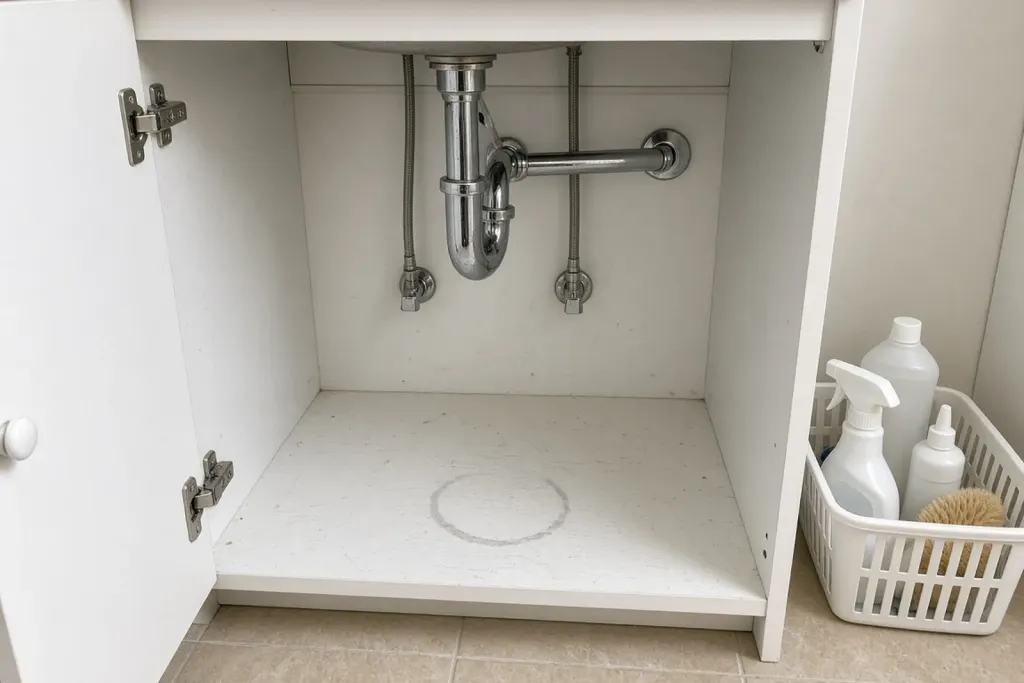
Clear out the cabinet under the sink before we arrive. That is where most of the work happens, and open space around the shutoffs saves time. If you already sent photos, you have done most of the prep.
On site, we find where the water is coming from, talk it through with you, and give you one price before any work starts. That is the price at the end of the job. A typical repair means shutting the water at the under-sink valves (or at the main if those valves will not close), covering the drain so tiny screws do not disappear, pulling the worn cartridge or washers, matching the new part to the old one, cleaning grit off the valve seat, then reassembling and testing hot and cold plus the connections under the sink.
Sometimes a second problem shows up once the cabinet is open, such as a crusty shutoff or a slow drip at the drain trap. If that happens, we show you what we found, explain it in plain language, price that fix separately, and wait for your yes. Before we leave, you should be able to turn the faucet on and off yourself, feel a smooth handle, and see a dry cabinet floor.
Wild Pine Plumbing works under Oregon CCB #249970. See more help with Portland plumbing problems, or call (503) 594-4779.
Urgent Faucet Problems That Need Same-Day Attention
Most faucet problems can wait a day or two. A few cannot. Ask one question: is water going somewhere it should not, and can you stop it?
- Water will not shut off even after the under-sink valves and the main.
- Hot water is stuck on, which is a burn risk around kids.
- A supply hose is bulging, cracked, or spraying.
- A shutoff valve broke or started leaking when you turned it.
- Water is pooling near outlets or a garbage disposal. Keep your hands out of the cabinet and kill power at the breaker if you can reach it dry.
- A stain or drip on the ceiling below a bathroom sink, which means water already traveled past the cabinet.
In a cold snap, no water or a trickle at one faucet while the rest of the house is fine can mean a frozen supply line. If there is no active leak, leave that faucet open a little and warm only what you can see and reach safely. A frozen pipe can split, and the leak may not show until it thaws. If you find a leak or a split, shut the main and call. If you cannot locate the freeze, cannot reach it safely, or cannot thaw it, call a licensed plumber.
A slow spout drip, a stiff handle, or weak flow from a clogged aerator is not an emergency. Put a cup under it and book a normal visit instead of paying for a rush call on a quiet Sunday night. If it is urgent, we still answer around the clock, and you still get one price before work starts.
Frequently Asked Questions
Can I replace just a faucet handle instead of the whole faucet?
Yes, if the body underneath is still sound. A loose or worn handle is often a cartridge or a screw under a small cap on the lever. If the rest of the faucet has no cracks or corrosion, swapping that one part usually solves it.
Is a dripping faucet worth an emergency call?
A slow spout drip into a freely draining sink usually can wait for a regular appointment. It wastes water and can wear the valve seat over time. Water under the cabinet, an overflowing basin, or a failed shutoff needs prompt help. Put a cup under a quiet spout drip and book a normal visit, but do not treat every drip as harmless.
Why does my faucet still drip after I already tried to fix it?
A drip that comes right back usually means the wrong part was replaced, mineral buildup kept the new part from sealing, or a second worn O-ring was missed. If a fix does not hold, stop and call instead of forcing another round.
Ready to Get Started?
Call (503) 594-4779.
Ask about our 10% discount for Military, First Responders & Seniors.