
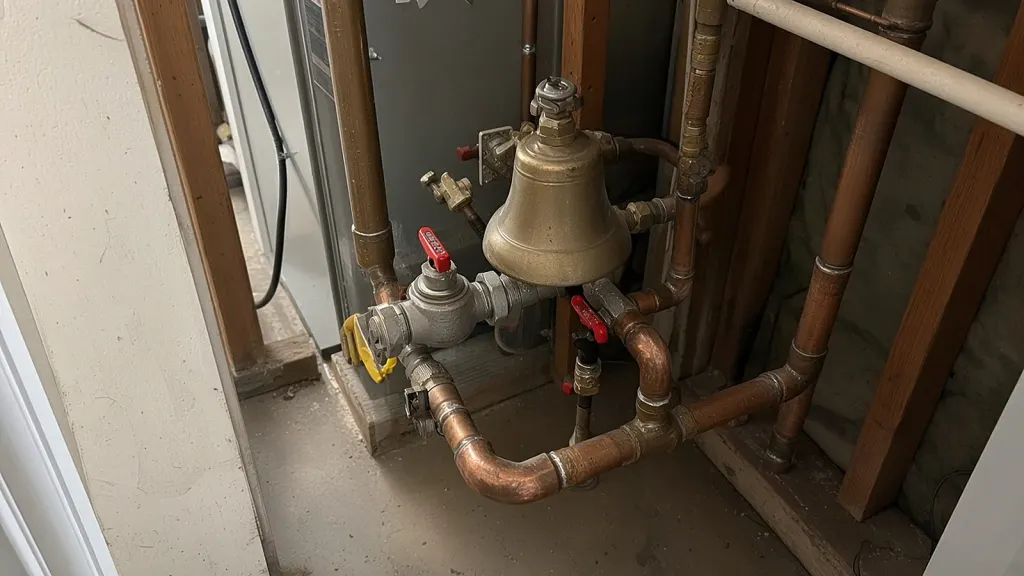
Water Pressure Regulator Replacement in Portland, OR
A gauge reading tells us whether the regulator is really the problem, so you only pay for a new valve when you need one.
Is It the Regulator or Something Else?
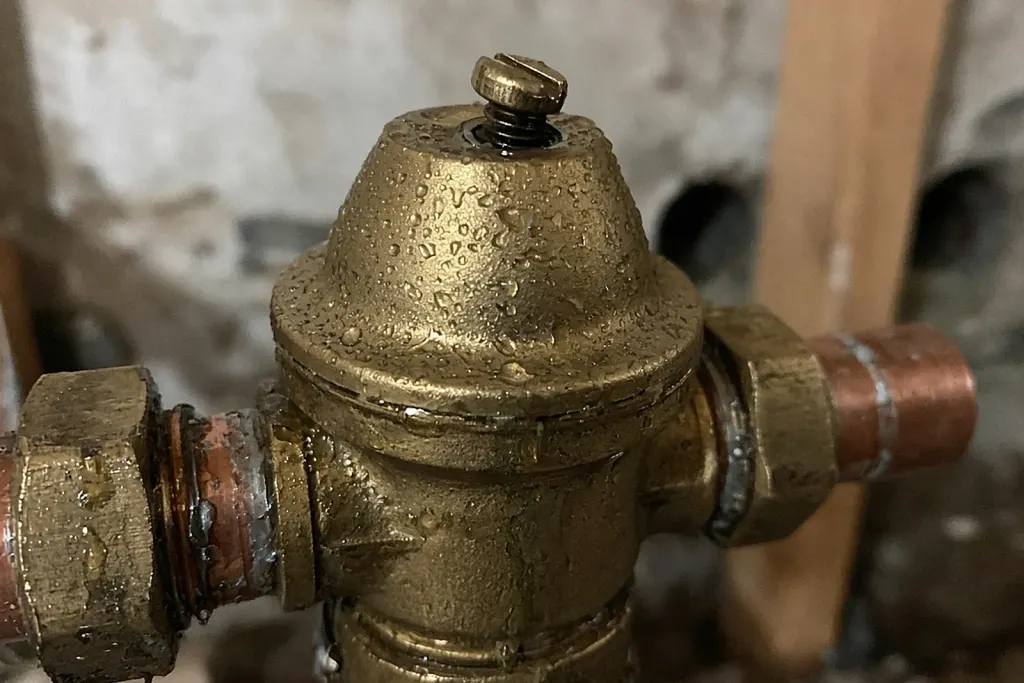
A failing pressure regulator usually shows up across the whole house, not at one faucet. The regulator, or PRV, is a bell-shaped brass valve near where your water line enters the house, and its job is to turn street pressure down to a steady level your pipes can handle. When it wears out, it can let too much pressure through, choke the flow, or swing between the two.
Signs that point to the regulator:
- Pipes bang or hammer when a faucet or the washing machine shuts off
- Toilet fill valves or hose bibs hiss or keep failing
- The relief valve on the water heater drips
- Pressure is weak everywhere at once, or strong one hour and weak the next
Weak pressure at one fixture is usually a clogged aerator or a bad valve at that fixture, not the PRV. Weak pressure in an old house with galvanized pipe can be the pipe itself narrowing inside, which is a repipe question rather than a regulator swap. That's why we'd rather test than guess.
Test Your Pressure Before You Book
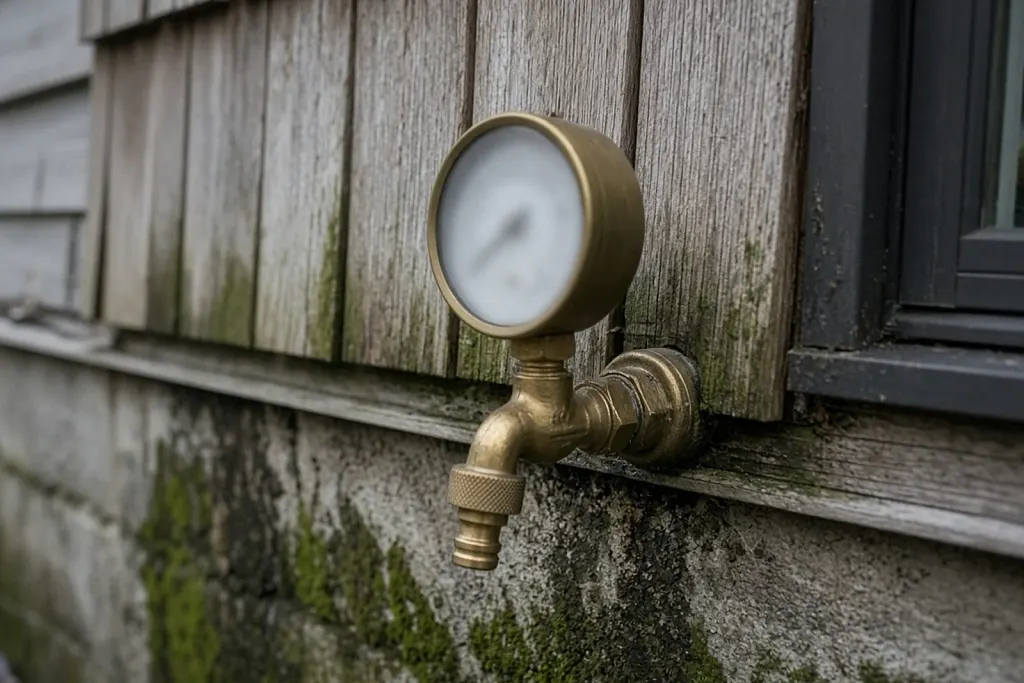
A hose bib pressure gauge from a hardware store gives you real numbers in about 15 minutes, and they help us price the job before we come out. Screw it onto an outdoor spigot on the house side of the regulator, or the washing machine hookup, with every faucet and appliance off. That's your static pressure.
The Portland Water Bureau's pressure guide says the city keeps most homes between 40 and 80 psi, that pressure varies by elevation and even between houses on the same street, and that plumbing code requires a regulator when a home gets more than 80 psi. A reading over 80 with a regulator in place usually means it isn't holding. A reading well under 40 everywhere, with the main valve fully open, can mean a stuck regulator or a supply problem.
Then leave the gauge on overnight with no water running, if your gauge has a tattletale needle. If the pressure climbs while the water heater heats, that's thermal expansion. A working regulator can trap that expanding water in the house, and the fix is often an expansion tank at the water heater, not another regulator. Send us the readings and a photo of the valve and its fittings.
Whose Job Is It to Replace It
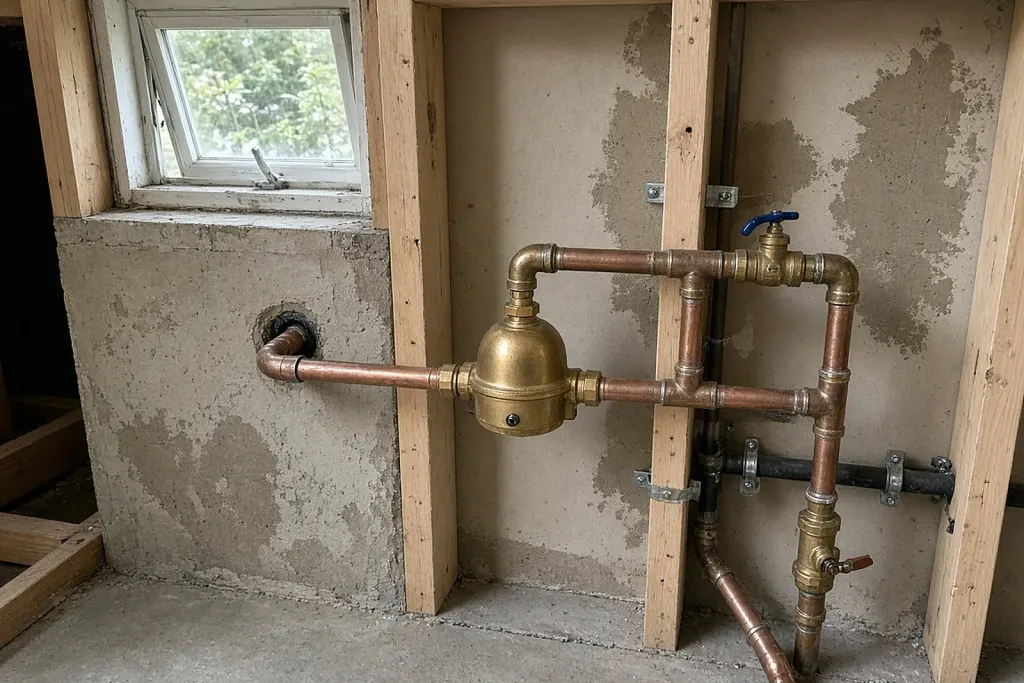
If you own the home, the regulator is yours to maintain. The Water Bureau says it can't adjust pressure at individual homes, and Portland City Code leaves pressure on private property to the plumbing code. If you think the pressure coming from the street is abnormal, call the Water Bureau's Water Quality Line at 503-823-7525 first. They can tell you the expected range for your address and test at the meter if needed.
If you rent, send your landlord the gauge readings. In a condo or townhome, check with the HOA, since the regulator may serve more than one unit. If you're building or remodeling, plan the regulator into the job from the start.
What Drives the Price
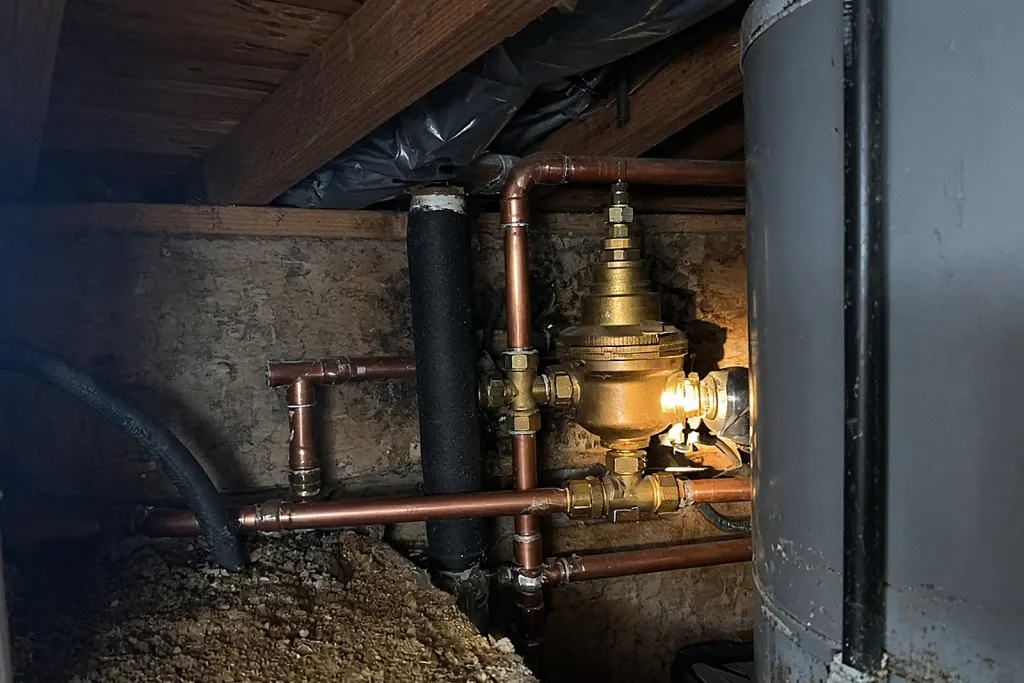
You get one price before work starts, and it's the same price at the end of the job. What moves that price is mostly access and the pipe around the valve. A regulator in an open basement with threaded unions comes out quickly. One buried in a crawlspace, inside a wall or in a box in the yard takes longer. A soldered or glued valve means cutting pipe and joining new pipe in, and copper, galvanized and plastic lines each take different fittings. An old main shutoff that won't fully close has to be dealt with before any work can start. If the overnight test showed thermal expansion, an expansion tank is a separate line on the quote.
Whoever you call, ask whether the price includes setting the new regulator and checking it with a gauge, and what happens to the price if the shutoff or nearby pipe is bad. If the job turns out to be more than a regulator, we'll tell you before doing anything and give you the new price so you can decide.
What Happens During the Replacement
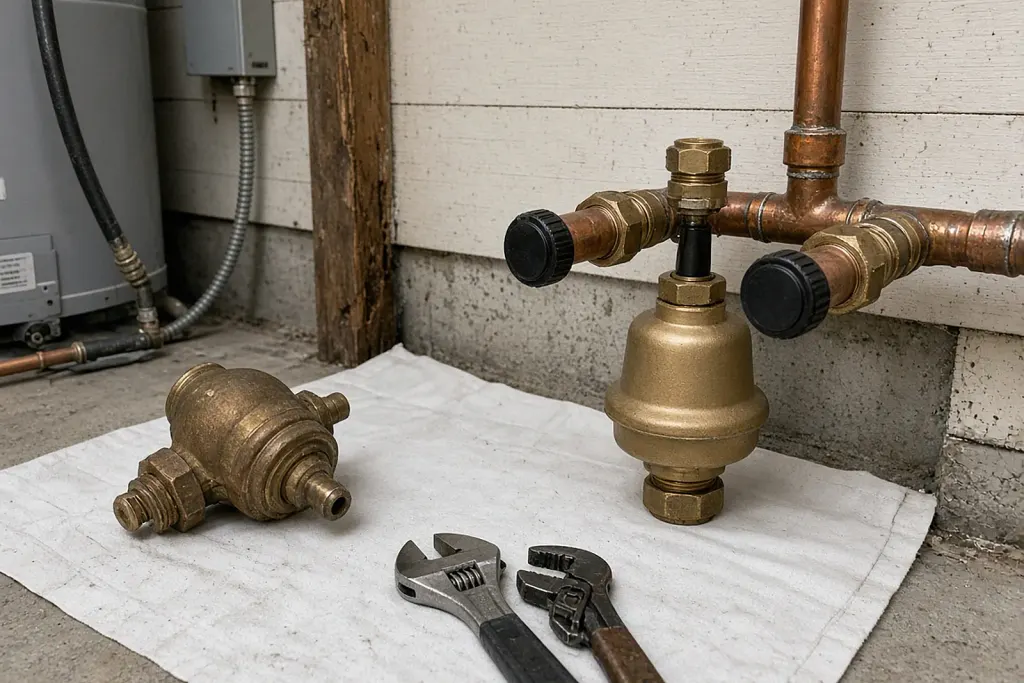
The water goes off at the main, the old valve comes out, and a new one of the right size goes in. If the old valve was soldered or glued, the pipe gets cut and new connections are made. The water comes back on, air gets bled from the lines, and the new regulator is set and checked with a gauge. Your faucets may sputter and the water can look cloudy for a minute, which is just air.
A day or two later, put your gauge back on and compare it to your first reading. If it still climbs overnight while the water heater runs, that's the expansion issue, not the new regulator, and you'll want to tell us. Wild Pine Plumbing is licensed, bonded and insured under Oregon CCB #249970. Military members, first responders and seniors get 10% off, and you can see the rest of our residential plumbing services in Portland on our main page.
Frequently Asked Questions
Common questions about water pressure regulator replacement in Portland
Will the Portland Water Bureau replace my pressure regulator?
No. The Water Bureau says it can't adjust pressure at individual homes, and Portland City Code puts pressure on private property under the plumbing code. The regulator sits on your side of the meter, so it belongs to the property owner. If you think the street pressure itself is abnormal, call the Water Quality Line at 503-823-7525 first.
What water pressure should my house have?
The Portland Water Bureau manages the system to keep most homes between 40 and 80 psi, and plumbing code requires a pressure reducing valve when a home receives more than 80 psi. Many plumbers set a new regulator lower than that ceiling to go easier on fixtures and appliances.
Will my water be off during the replacement?
Yes, the water is shut off at the main while the old regulator comes out and the new one goes in. Once the new valve is set and checked, the water comes back on and should run normally within a few minutes after the air clears.
Get a Regulator Price Before We Start
Call (503) 594-4779 with your gauge readings and a photo of the valve. We answer 24 hours a day.
Ask about our 10% discount for Military, First Responders & Seniors.