
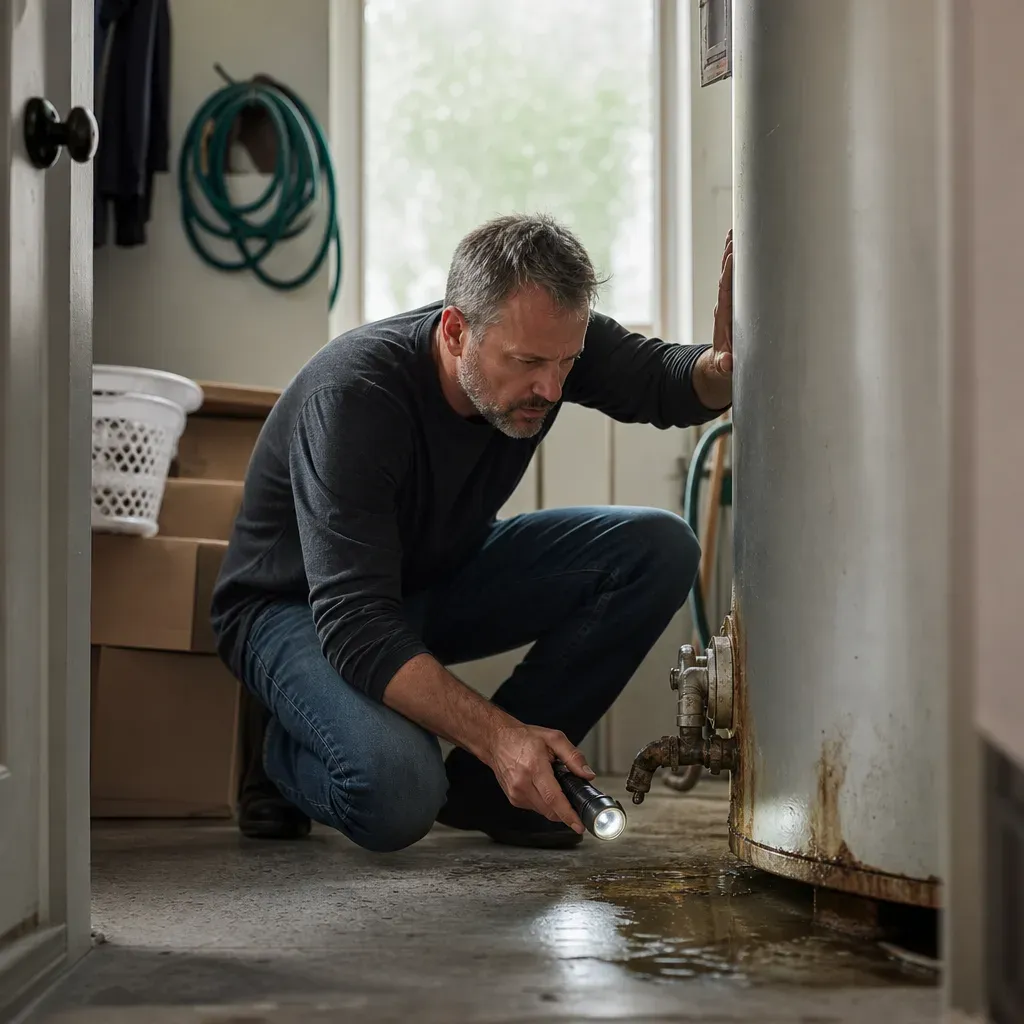
Should You Repair or Replace a Water Heater?
A Portland homeowner's guide to reading the warning signs before you spend money. Licensed, insured, and available 24/7.
- Licensed & Insured, CCB# 249970
- Available 24/7, nights and weekends
- Upfront pricing
- 10% off for Military, First Responders & Seniors
Water heater acting up?
Straight answers and upfront pricing, any hour of the day.
Available 24/7 · Licensed & Insured · CCB# 249970
Why Age Alone Doesn't Answer This Question
Age is a clue, not a verdict. A well-kept 11-year-old tank can outlast a neglected 7-year-old one, so the better questions are what failed, how the tank looks inside, and what your water has been doing to it. Should you repair or replace a water heater? The answer comes from the whole picture, not the date sticker.
Most people start here. They find the serial number, do the math, and decide the thing is doomed. We get that call all the time in Portland.
And age does matter. A standard tank water heater usually lasts somewhere between 8 and 12 years, and tankless units often run longer. But that range is an average, not a countdown clock. Two heaters installed the same week can end up in completely different shape, because what happens to a tank over those years matters more than the years themselves.
Here is what we weigh before anyone says the word replace:
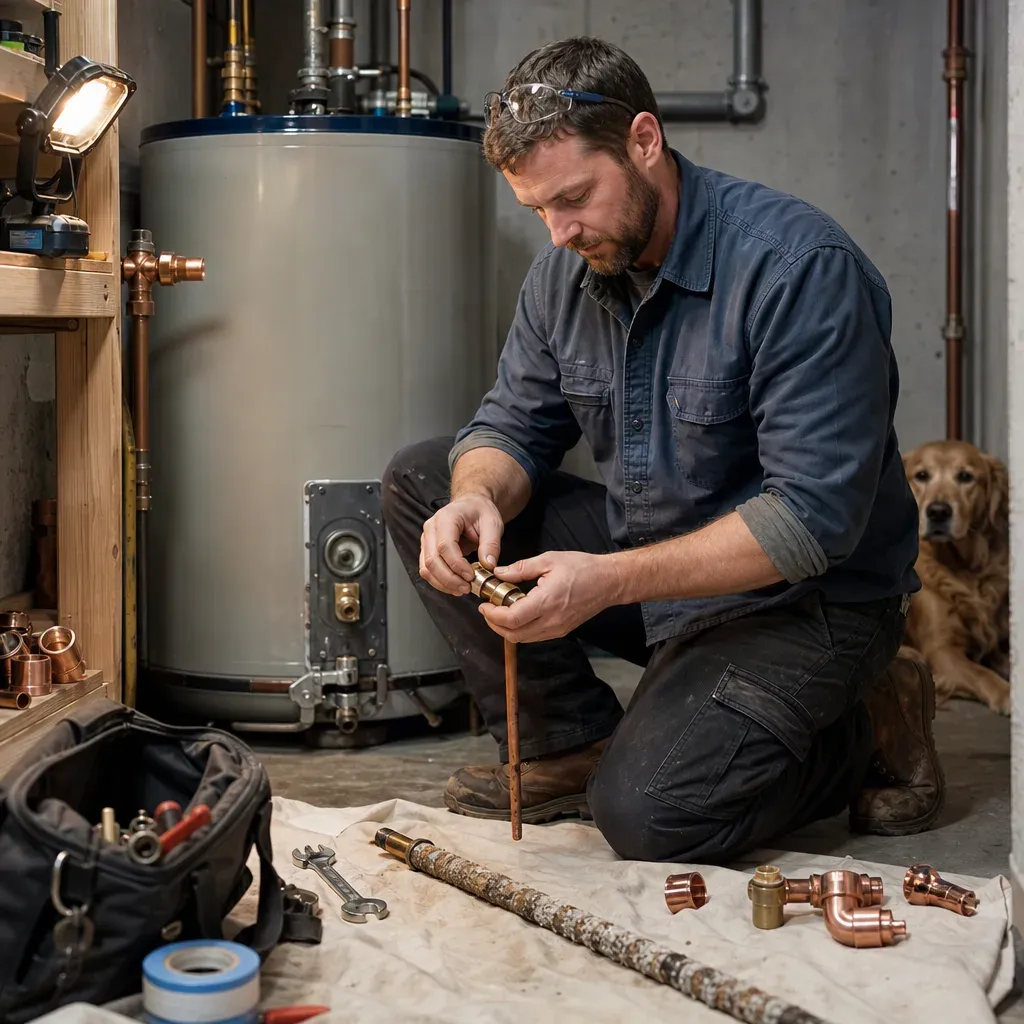
- What part failed. A thermocouple, a heating element, or a thermostat is a repair. A leaking tank body is not.
- Sediment buildup. Tanks that were never flushed collect a layer of mineral grit on the bottom, and that grit cooks the steel from the inside.
- The anode rod. That sacrificial rod protects the tank lining. Once it is gone, corrosion starts on the tank itself, and nobody can put that back.
- Where it sits. A heater in a finished basement or an upstairs closet carries more risk if it lets go than one sitting over a garage drain.
- How often it has needed repairs. One fix in nine years is normal. Three fixes in two years is the tank telling you something.
Portland water is on the soft side, which is good news for tanks. Soft water means less scale than folks deal with in harder-water parts of the country. But soft water can be a little more aggressive on the anode rod, so those rods still wear out and still need checking.
A homeowner out in Southeast Portland called us about a unit she was sure needed replacing. Thirteen years old. No hot water at all. It was the gas control valve. The tank itself was dry and solid, with no rust at the seams. We fixed it, flushed it, swapped the anode rod, and she got several more good years out of a heater she had already written off.
The flip side happens too, and it is more common. A seven-year-old tank, never flushed, water pooling under the base. There is nothing to repair on a tank that is rusted through, and we will not pretend otherwise to save you a hard conversation.
So use the age number as context. If your heater is under 8 years old and something broke, repair is usually the first thing to look at. Past 12 years, repair still might make sense, but you should go in knowing you are buying time rather than a decade. The only way to know which situation you are in is to have someone look at the tank, not just the label. Our Portland water heater service starts with exactly that.
Signs Your Water Heater Needs Repair
Most water heaters give you warning before they quit. People just do not know what they are looking at. A little noise, a shower that runs cold sooner than it used to, a damp spot near the base. Those are your tank telling you something is wrong while there is still time to fix it.
We see this all the time in Portland homes. Somebody calls after the tank splits open and floods a finished basement, and when we ask a few questions, it turns out the thing had been rumbling for six months.
Any one of these usually means repair territory, not replacement, especially if your heater is still under ten years old:
- Popping, rumbling, or crackling sounds from the tank. That is sediment buildup, which still collects over time even with soft water. A flush often quiets it right down.
- Water that gets lukewarm instead of hot. Usually a failed heating element or a thermostat that drifted out of range. Both are common fixes.
- Hot water that runs out much faster than it used to. Sediment takes up space in the tank, so you are heating less water than you think.
- A small drip from a valve, fitting, or the pressure relief line. Fittings leak. Tanks crack. There is a big difference between the two.
- The pilot light on a gas unit will not stay lit. Often a dirty thermocouple, not a dead heater.
- Rusty or metallic-smelling hot water. Sometimes it is the anode rod, which is a replaceable part. Sometimes it is the tank itself.
That last one trips people up. The anode rod is a sacrificial metal rod inside the tank that corrodes so the steel does not. When it is used up, rust starts eating the tank. Swap the rod and you can add years. Ignore it and you are shopping for a new heater.
So how do you tell a leak that matters from one that does not? Look at where the water is coming from. If it is dripping from a threaded connection at the top or from the relief valve, that is hardware, and hardware gets replaced. If water is seeping out from underneath the tank with no fitting above it, the tank has failed. Steel tanks cannot be patched.
We had a call last winter in a Southeast Portland bungalow, older basement, heater tucked behind the stairs. The homeowner thought the tank had gone. It turned out to be a loose cold water inlet fitting that had been weeping for weeks. Fifteen minutes and it was done. She had already priced out a new unit.
One more thing worth knowing. A heater that trips the breaker over and over is not a nuisance, it is an electrical problem that needs eyes on it. Same with a gas unit that smells off. Those get checked right away, not next weekend. And if your heater is making noise but still working, that is the best time to call. Repairs are simpler when nothing has failed yet.
Signs Your Water Heater Needs Replacement
Some water heaters give you weeks of warning. Others give you a wet floor and a bad morning. After years of crawling into Portland basements and tight utility closets, we see the same handful of red flags show up again and again.
Age is the first one, and it is the loudest. Most standard tank water heaters run 8 to 12 years. Once you pass that window, the steel tank has been sitting in hot water for a decade, and rust does not reverse itself. A repair on a 14-year-old tank often buys you months, not years.
To find the age, look for the serial number on the label near the top of the tank. On many brands, the first four digits hide the month and year it was built.
Here are the signs that push most homeowners toward replacement rather than another repair:
- Rusty or brown hot water from the tap, especially when the cold side runs clear
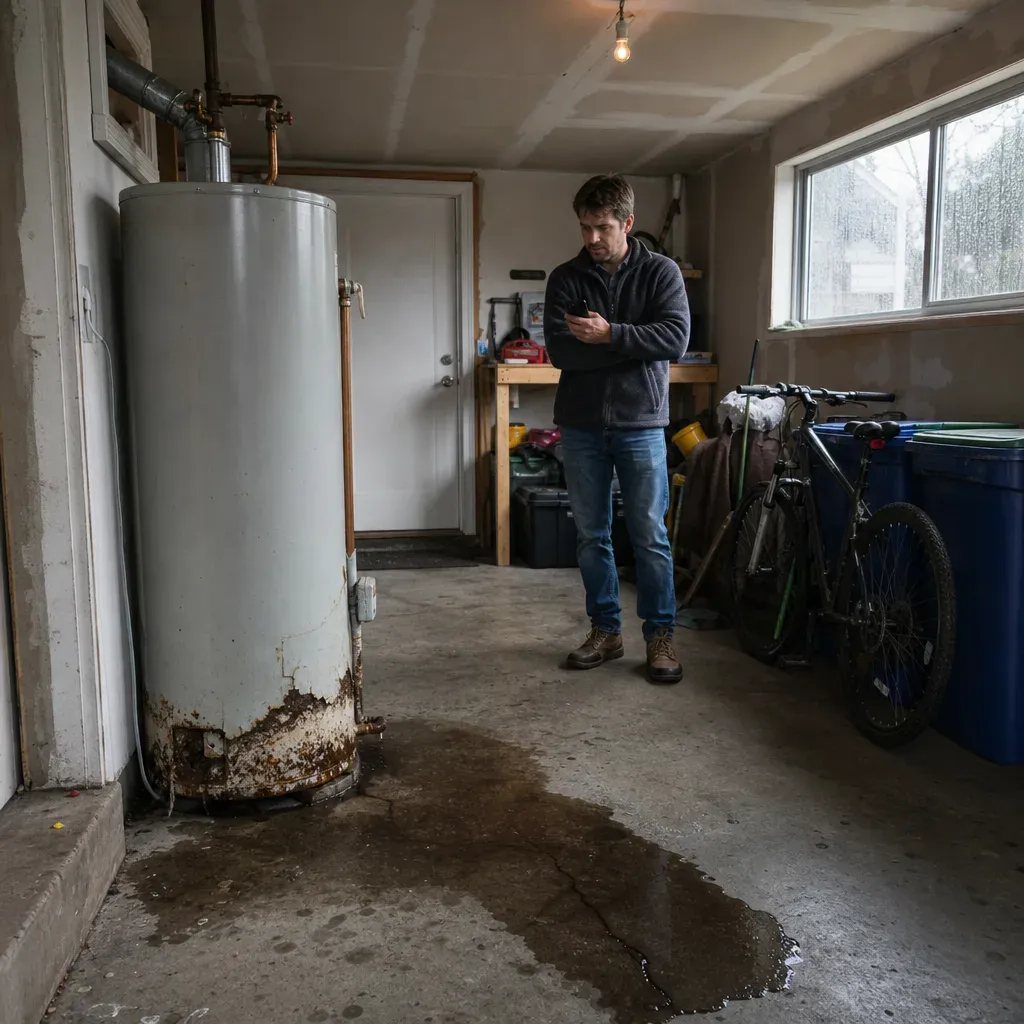
- Water pooling around the base of the tank or steady dripping from the tank body itself
- Loud rumbling, popping, or banging while the burner runs, which usually means heavy sediment
- Hot water that runs out much faster than it used to, even though nothing in your household changed
- Visible rust on the tank seams, the top fittings, or the bottom skirt
- You have already paid for two or more repairs in the past couple of years
That last one matters more than people expect. A thermocouple this year, a heating element next year, then a leak. The tank is telling you something.
Leaking from the tank body is the hard line. A dripping valve or a loose fitting can be fixed. A leak through the steel shell cannot. The tank is corroded from the inside and the water has found a path out. That one is a replacement, no debate.
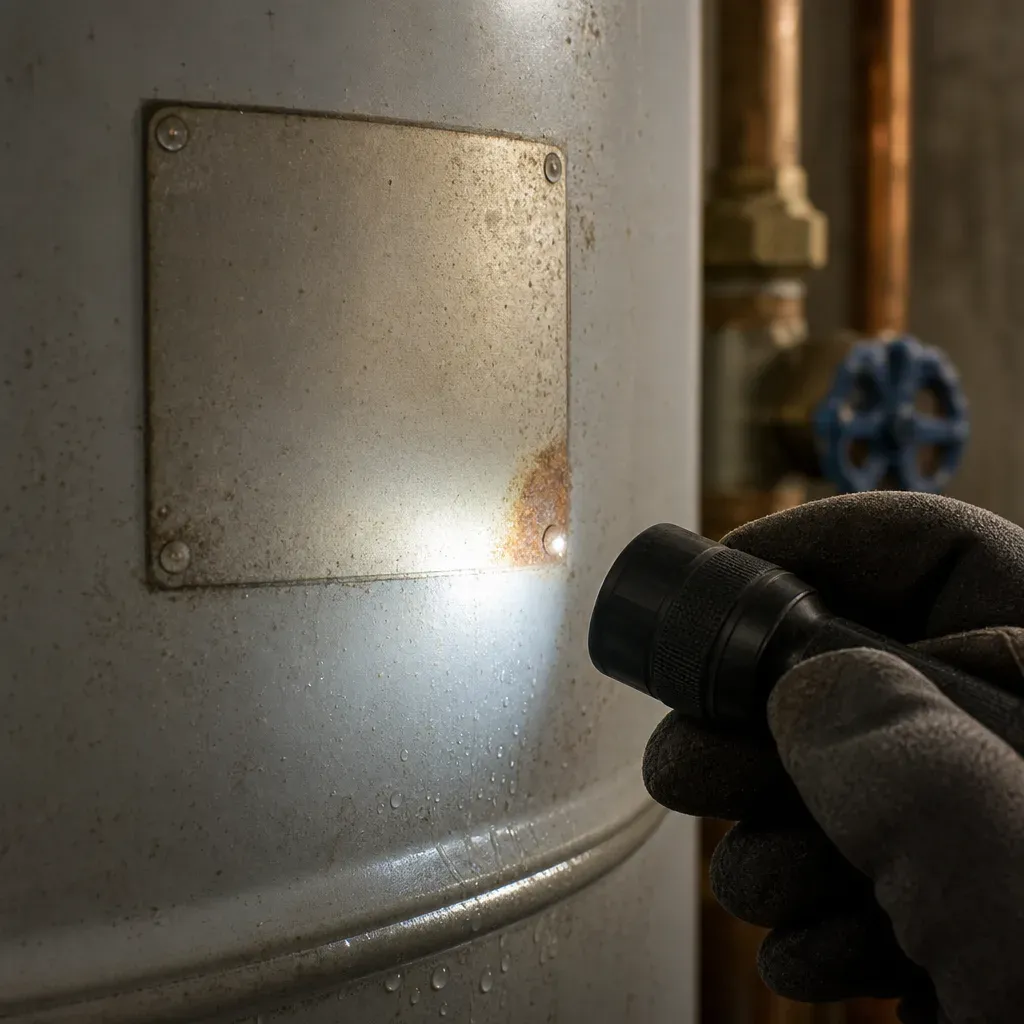
Here is a quick check you can run yourself in about ten minutes: find the serial number label and work out the manufacture year, shine a light around the base for rust stains or dried mineral tracks, run the hot water at a tub for two minutes and watch the color, listen for popping or rumbling while the heater runs, check the top of the tank for corrosion around the water connections, and write down any repairs you have paid for in the last three years. If two or more of those come back bad and the unit is over ten years old, you are looking at replacement.
A Portland homeowner called us last winter about lukewarm showers. Old tank, tucked into a finished basement laundry room with drywall on three sides. No visible leak yet, but heavy rust at the top fittings and sediment noise you could hear upstairs. Replacing it on a Tuesday was far less trouble than a flooded floor would have been.
Plenty of older Portland homes keep the water heater in a basement or a garage corner. Flushing the tank once a year genuinely helps with sediment, but it will not undo rust that has already eaten through. When replacement is the right call, Wild Pine Plumbing installs tank and tankless units and quotes upfront before any work.
Frequently Asked Questions
How do I know if my water heater needs a professional look?
Call a professional if you notice rust-colored water, popping sounds, or any water pooling near the base. Those signs can point to sediment buildup, a worn anode rod, or a failing tank, and it takes a trained eye to tell the difference. A quick homeowner check is fine for noticing the problem, but deciding repair or replace takes a real inspection.
Is it a myth that an old water heater always needs replacing?
Yes, that is one of the biggest misconceptions we run into. Age is one clue, not the full story. We have seen 13-year-old tanks with dry, solid seams that only needed a new gas control valve, and 7-year-old tanks already rusted through from neglect. What matters more is what part failed, how much sediment built up, and whether the anode rod was ever replaced.
Does Portland's water quality affect how long my water heater lasts?
Yes. Portland's soft water helps reduce scale buildup compared to harder-water cities, which is good news for your tank. But soft water can wear down the anode rod a bit faster, so that part still needs regular checking. Sediment can still collect at the bottom over time, especially if the tank has never been flushed.
What does a failing anode rod mean for my tank?
A failing anode rod means your tank's lining has lost its protection and rust can start eating into the steel. The anode rod is a sacrificial metal rod that corrodes on purpose so your tank does not have to. Once it is used up, corrosion moves to the tank walls, and that damage cannot be undone. Catching it early with a swap can add years to your heater's life.
How can I tell a fixable leak from one that means the tank is done?
Look at where the water is coming from. A drip from a fitting, valve, or the relief line at the top is repairable hardware. Water seeping out from underneath the tank, with nothing leaking above it, means the tank body has failed and cannot be patched. That distinction is the core of deciding between a repair and a full replacement.
Are strange noises from my water heater a sign of a bigger problem?
Not always. Popping, rumbling, or crackling usually means sediment has built up at the bottom of the tank, and a flush often quiets it down. Hearing noise while your heater still works fine is the best time to get it checked, since repairs are simpler before anything fails. See our Portland water heater service for how we handle it.
Ready to Get Started?
Upfront pricing. Honest work. Available 24/7 across Portland Metro.
Ask about our 10% discount for Military, First Responders & Seniors.