
Leak Detection in Portland: Know When You Need It
Honest plumbing for Portland Metro — licensed, insured, available 24/7
Skip Leak Detection for These Obvious Problems
Leak detection is for leaks you can't find. A lot of water problems aren't hidden at all. If yours is on this list, don't pay anyone to go searching. Get it fixed, or in some cases, call a different trade.
These are plumbing leaks you can already see. They need a repair, not a search:
- A faucet or showerhead that drips after you shut it off. That's usually a worn part inside the fixture.
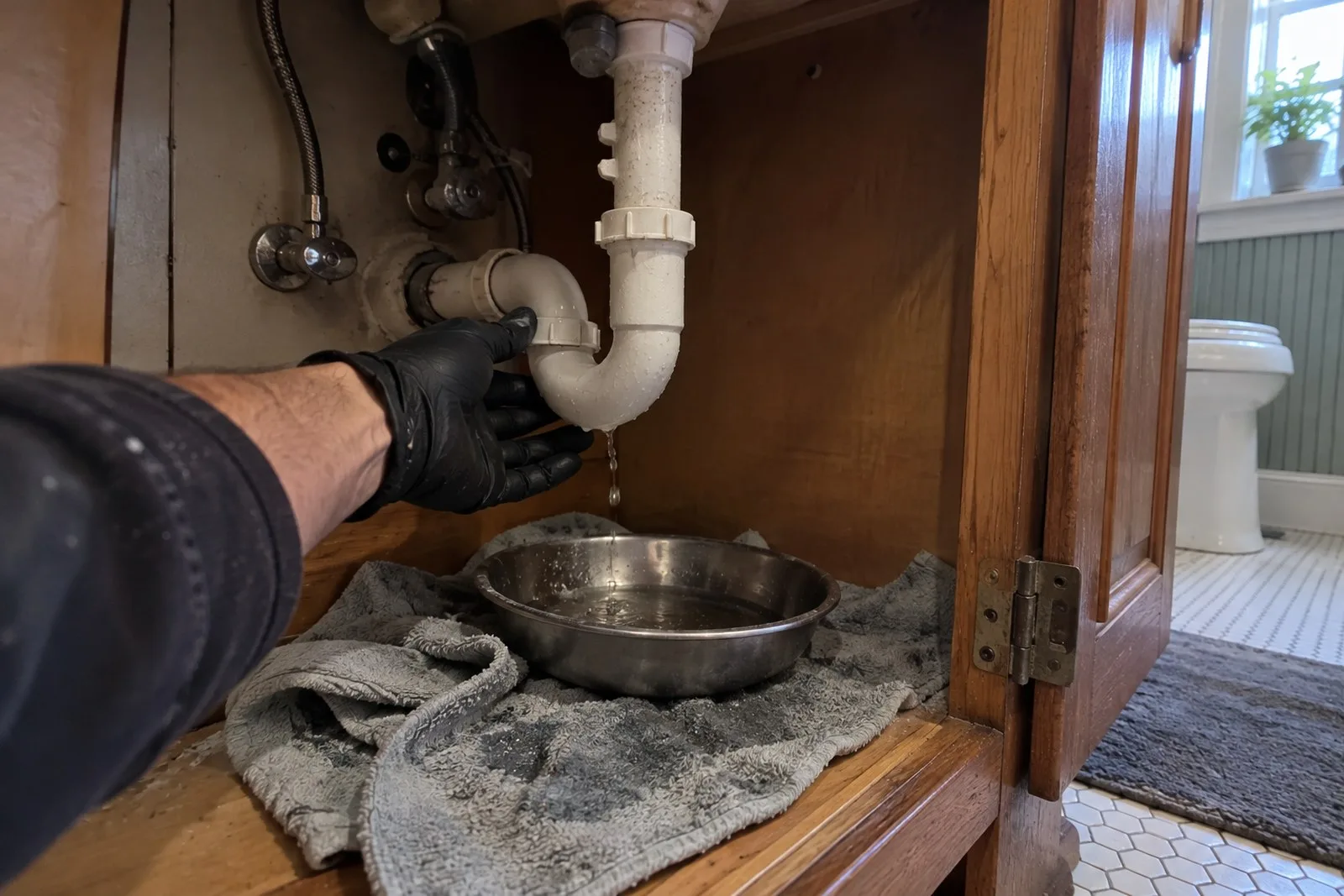
- Water pooling in the cabinet under a sink. Look at the drain trap and the supply lines first. A loose connection or a worn line is a common cause.
- A toilet that runs or refills on its own. If it failed the dye test from the last section, you've found your leak.
- Water around the base of your water heater. That's coming from the tank or its fittings, not from inside a wall.
- A dripping hose bib on the outside of the house. You can see it, so you don't need anyone to search for it.
Some water problems look like a leak but aren't one at all.
Sweating pipes are a good example. Cold water lines and toilet tanks can collect beads of water on humid days. It drips, it leaves a wet spot, and it looks like trouble. But nothing is escaping from the pipe. If the pipe or tank is wet all over and dries out when the weather changes, you're probably looking at condensation.
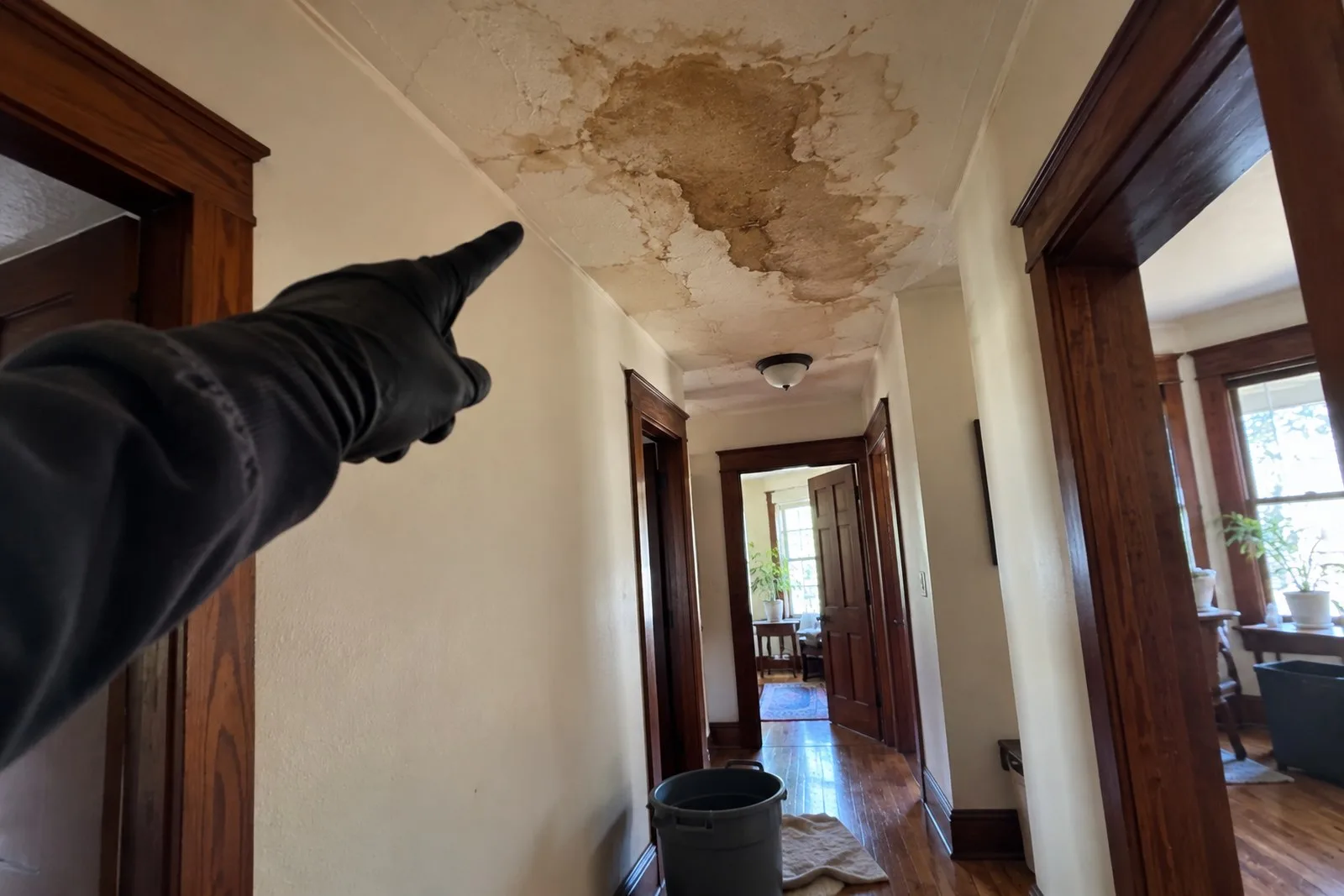
Ceiling stains that only show up during heavy rain are another one. If the stain is near an outside wall, under a window, or on a top-floor ceiling, and it grows after a storm and then dries out, water is likely getting in from outside. That's a job for a roofer or a window contractor. A plumber searching your pipes won't find anything, and you'll pay for the visit anyway.
Before you assume a hidden leak, rule out the things that use water on their own:
- Washing machine hoses. Pull the machine out and look at the back.
- The dishwasher. Check underneath the front panel for drips or a wet spot.
- The fridge water line. If your fridge has an ice maker, the thin line behind it can leak.
- A sprinkler or irrigation system. It can make your meter move even when every tap in the house is off.
- A water softener. Some run a cleaning cycle that uses water on a timer.
If one of these turns out to be your problem, great. You just saved yourself money and some holes in your walls.
Here's the straight answer. We'd rather you skip a search you don't need than pay for one. Leak detection makes sense when you've checked the obvious spots, ruled out appliances and weather, and something still doesn't add up. Your meter still moves. The stain keeps growing on dry days. The bill keeps climbing. That's a real hidden leak, and that's when finding the exact spot matters.
How Leak Detection Works Before Any Wall or Slab Is Opened
Good leak detection works from big to small. You start with the whole house and narrow it down step by step until you're looking at one spot on one pipe. Only then does anyone cut. A hole in the right place is a small patch job. A hole in the wrong place is two repairs instead of one.
Here's how the search usually goes, in plain terms.
- Split the system in half. The first question is simple: is the leak inside the house or in the line running through the yard? Closing the main shutoff and watching the meter answers it. If the meter stops, the leak is inside. If it keeps moving, the leak is between the meter and the house.
- Check hot vs. cold. Shutting the valve to the water heater shows whether the leak is on the hot side or the cold side. A hot-side leak under a floor is often what makes that warm spot you feel under your feet.
- Pressure test the lines. A gauge goes on the system to see if it holds pressure. If the pressure drops, water is getting out. Testing one section at a time shows which run of pipe is losing it.
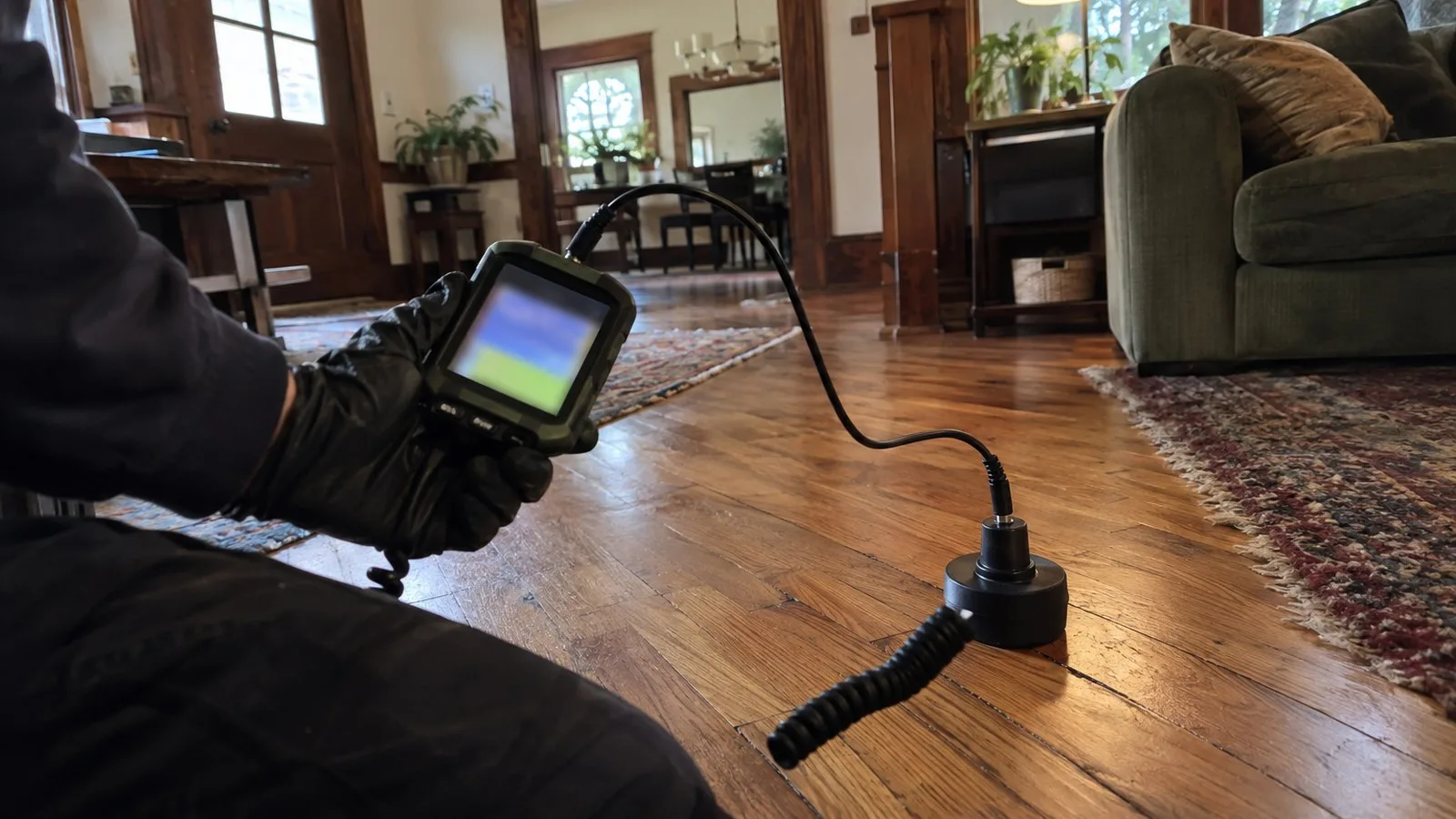
- Listen for it. Water forced through a crack makes a hiss you can't hear with your ear. Listening equipment picks up that sound through floors, walls, and soil. The sound gets louder as you get closer, so the tech can follow it to the spot.
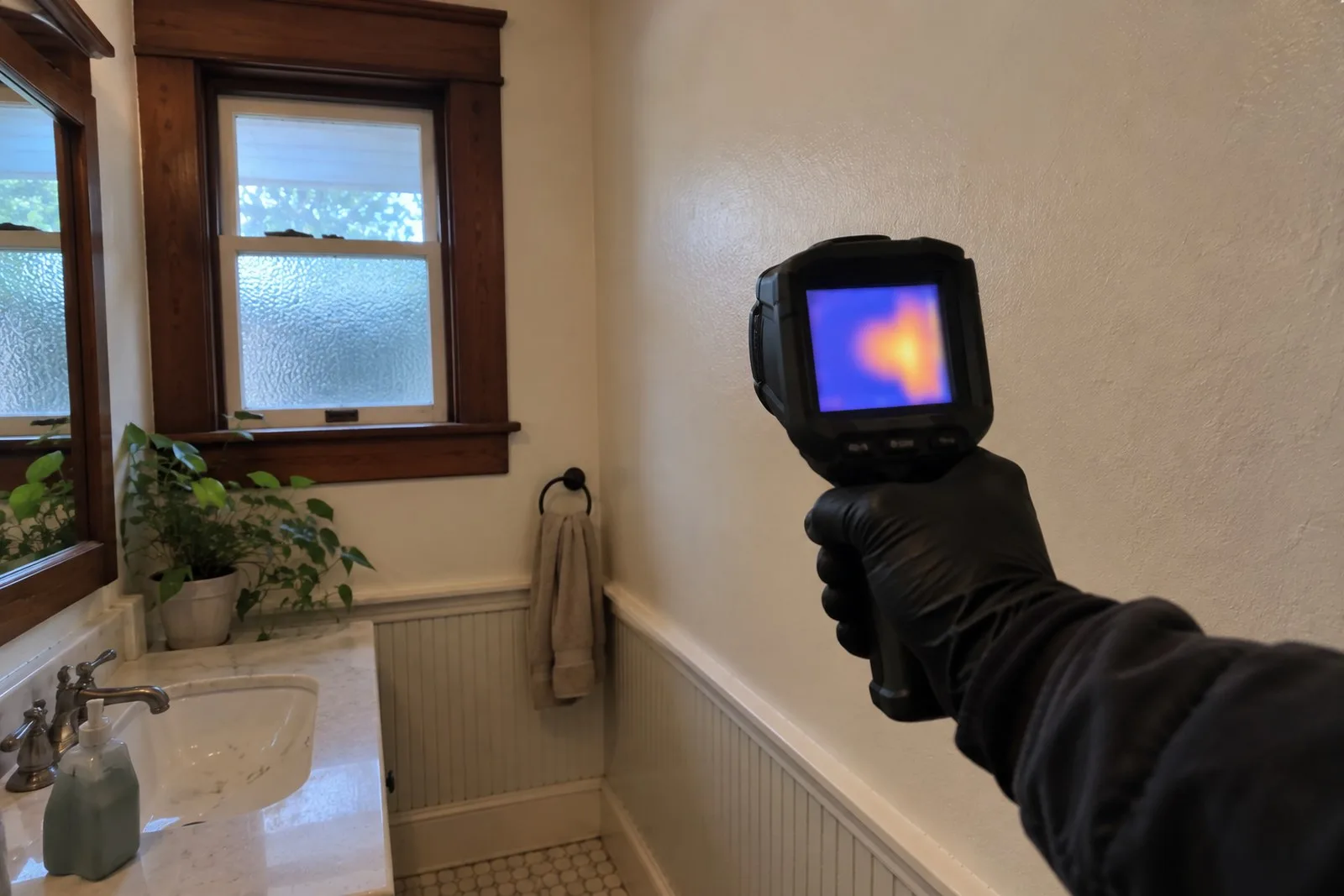
- Look for heat and moisture. Thermal cameras show temperature differences behind drywall, which helps a lot with hot-water leaks. Moisture meters show how far water has spread in a wall or floor, so you know where the damage stops.
- Trace the hard ones. For a line buried deep or under a slab, some pros push a safe tracer gas into the drained pipe. The gas escapes at the leak and comes up through the concrete or soil, where a detector can pick it up.
No single tool does the whole job. Listening works great on a pressurized supply line but struggles near a noisy street or a running appliance. A thermal camera is great for hot water but does less for a cold line. The skill is in knowing which method fits your house and your leak, and using more than one to confirm the spot.
Think about what this means for you. Say you've got a stain spreading across the dining room ceiling. Without a proper search, someone might open the ceiling right under the stain. But water travels. It can run along a joist and drip several feet from where the pipe failed. Pinpoint it first and the opening goes where the leak really is.
The same goes for slabs. Breaking up concrete is loud, messy, and costly to put back. Finding the leak within a small area can be the difference between one neat cut and trenching across a room. Sometimes it shows the leak is in a spot where rerouting the line makes more sense than digging at all.
Before you hire anyone, ask them a few things. How will they narrow it down? Which methods will they use on your kind of leak? How will they confirm the spot before they open anything? A straight answer tells you they plan to find it, not guess at it.
What Happens After the Leak Is Found
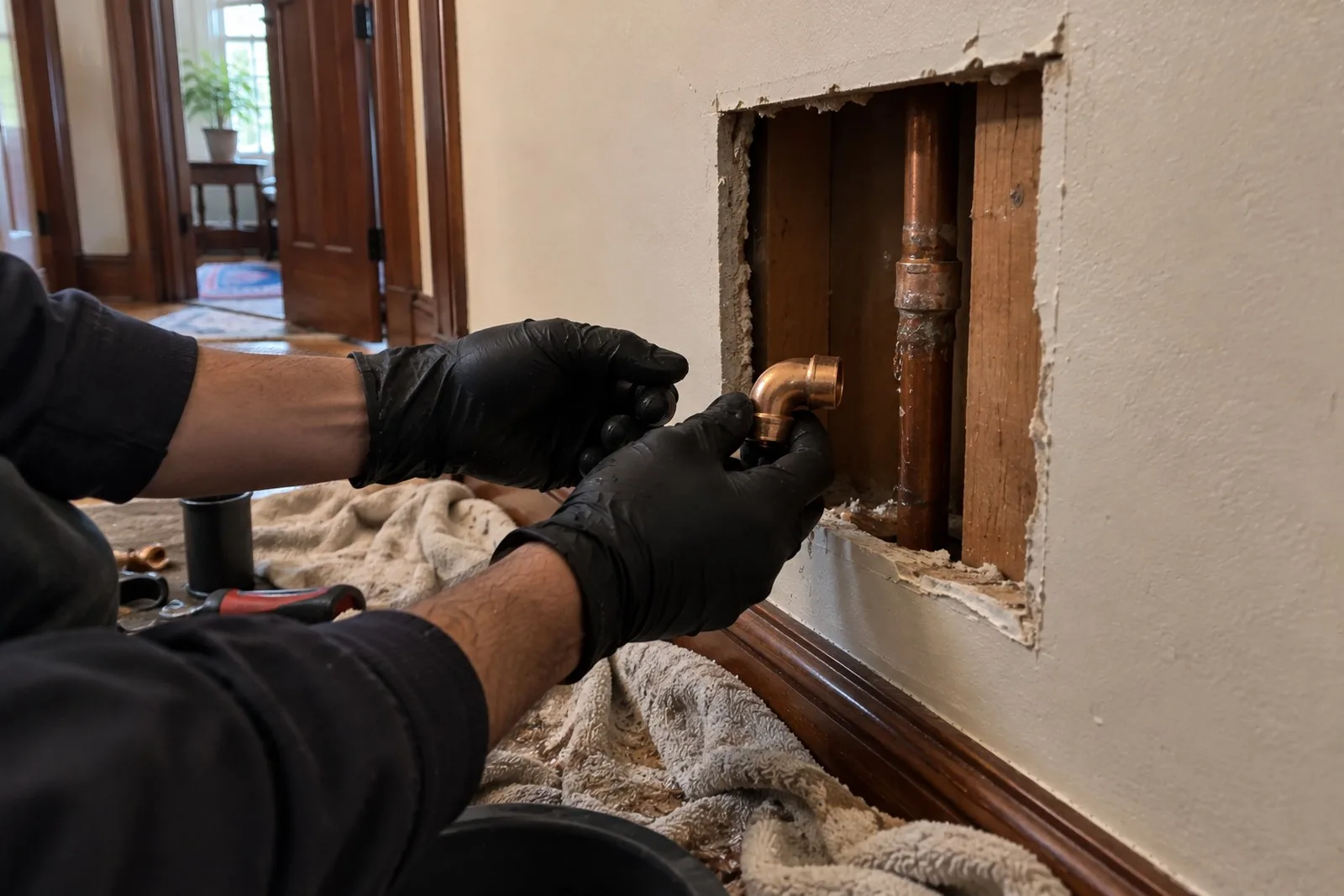
Finding the leak is half the job. The other half is fixing it the right way and making sure it stays fixed. Here's what that looks like once the spot is marked.
First, you should get a clear answer. Where the leak is, what failed, and what it'll take to repair. You shouldn't have to guess what you're paying for. At Wild Pine Plumbing, we give you an upfront, honest quote before any work starts. If something changes once a wall is open, we tell you before we keep going.
The fix depends on where the leak turned up and what shape the pipe is in. These are the usual paths:
- Spot repair. One bad joint or a single pinhole in otherwise healthy pipe. We open a small area, replace the damaged section, and close it back up.
- Reroute. When a line under a slab fails, it can make more sense to run a new line through the walls or ceiling than to break up concrete. You skip the jackhammer and the patching.
- Repipe. If the pipe has more than one leak, or more are likely on the way, patching one spot just buys time. A repipe with PEX or copper replaces the problem instead of chasing it.
- Yard line repair or replacement. A leak between the meter and the house means digging. Depending on the line's age and condition, that's a repair or a full water main replacement.
We'll tell you which one fits, and why. If a simple repair will do the job, that's what we'll recommend. If the pipe is worn out, we'll show you what we found so you can see it for yourself.
Cost goes up or down for a few clear reasons. Where the leak is matters most. A pipe behind drywall is easier to reach than one under a slab or deep in the yard. The pipe material, how much of it needs replacing, and how much patching or digging it takes all play a part. Ask any plumber to walk you through those pieces before you agree to anything. If the repair is bigger than you planned for, we offer financing through Wisetack. Military members, first responders, and seniors get 10% off.
A good repair gets checked before anyone calls it done. That means testing the line again after the fix. The pressure should hold, and the meter should sit still with everything off. If it doesn't, the job isn't finished.
Don't forget about the water that already got out. The moisture readings from the search show how far it spread. Wet insulation, drywall, or subfloor may need to dry out, or be replaced, so mold doesn't move in. Take photos of the damage and the repair. They help if you file an insurance claim.
After the work is done, we follow up to make sure you're fully taken care of. We're licensed, bonded, and insured, and our journeyman plumbers do the job right the first time. See everything we do as your plumber in Portland.
What Drives Leak Detection Costs Up or Down
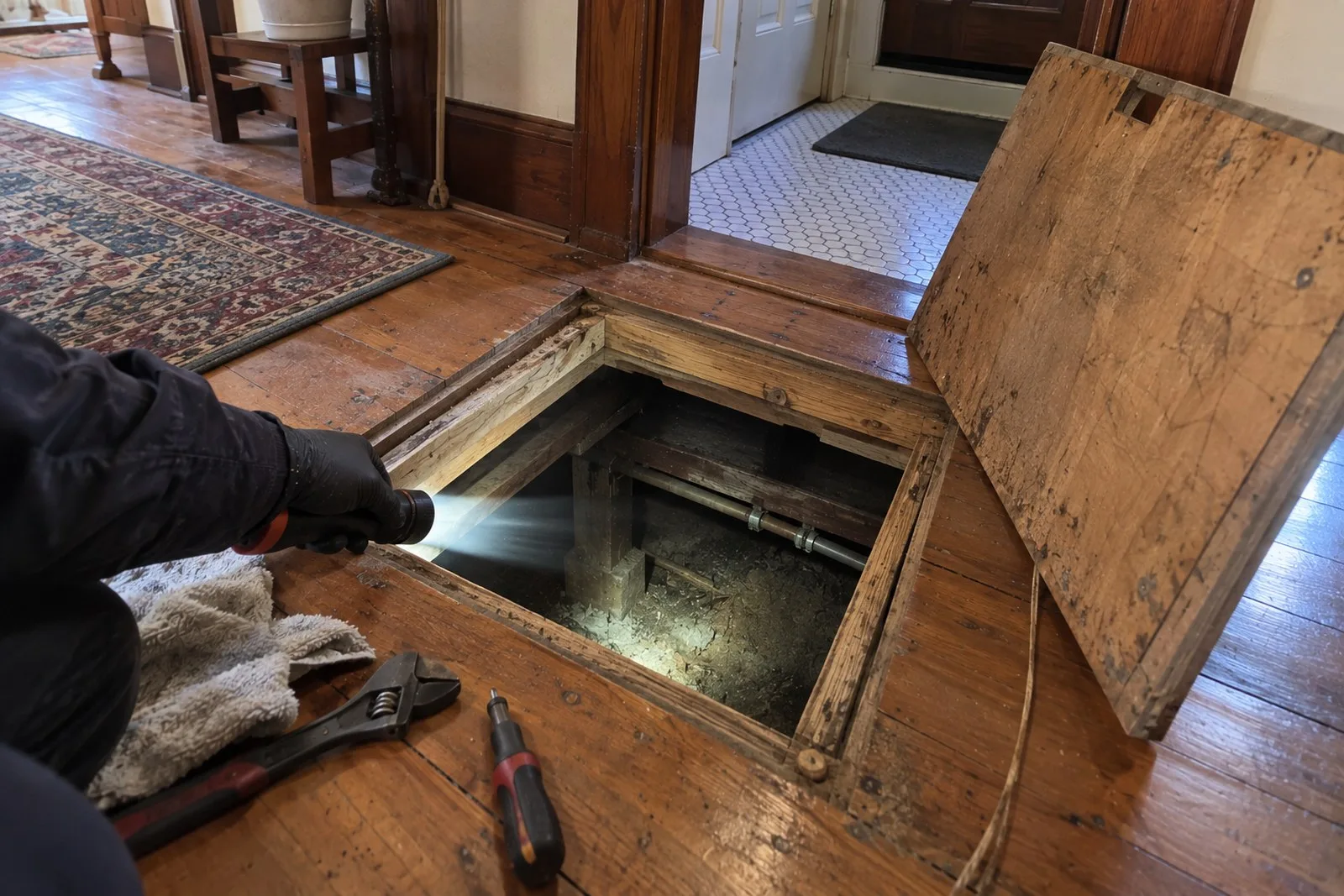
The cost of finding a leak comes down to one thing: how hard it is to find. A leak that shows up on the first pressure test costs less to locate than one that takes three methods and most of a day to confirm. Here's what pushes that effort up or down.
- Where the leak is hiding. A supply line inside an easy-to-reach wall is the simplest search. A leak under a concrete slab or in a buried yard line takes more time and more equipment to confirm.
- How many methods it takes. Sometimes one listening pass finds it. Other times it takes listening, a thermal camera, and pressure testing section by section before the spot is certain. Each added step adds time.
- Whether the leak is steady or comes and goes. A supply line under pressure leaks all the time, so it's easier to catch. A drain line only leaks when water runs down it, so that search can take longer because the leak has to be made to happen while someone is listening or watching.
- How easy it is to get at the pipes. An open crawlspace or an unfinished basement lets a tech see and test a lot of pipe directly. Finished ceilings, tile floors, and built-in cabinets mean more work from the outside in.
- Background noise. Listening equipment works best in a quiet house. A busy street, a running furnace, or a pump nearby can make the search slower.
- When you call. A search at 2 a.m. on a holiday often costs more than one during regular hours with most companies. If water is actively pouring in, it's worth it. If it's a slow, steady leak, waiting until morning may make sense.
Yard lines deserve a special note in Portland. When the ground is soaked through the wet season, surface clues like a soggy patch get harder to read. That can mean leaning more on pressure tests and listening to narrow down a buried leak, which can add time.
Pricing for this work usually follows one of a few models. Some companies charge a flat fee for the search. Others bill by the hour. Some fold the search into the repair price. None of these is wrong. What matters is that you know which one you're getting before anyone starts.
Here's what drives the bill up when it shouldn't. Opening walls or floors to look around instead of to fix something. A search that runs for hours with no clear plan. A quote that leaves out what happens if the first method doesn't find it. A careful search can cost more up front than a quick guess, but a wrong guess usually costs more in the end, because you pay to open and patch the wrong spot and then still pay to find the right one.
Before you agree to a search, ask these questions:
- Is the search priced as a flat fee, by the hour, or as part of the repair?
- What happens to the price if the first method doesn't find the leak?
- Will you mark the exact spot and explain what you found before any repair work starts?
- Does the price change for nights, weekends, or holidays?
Clear answers to those four questions tell you most of what you need to know about the bill and the company giving it to you.
Frequently Asked Questions
Common questions about Leak Detection
Is leak detection worth paying for, or should I just open the wall myself?
Yes, it's worth it, because guessing almost always costs more. Opening a wall or breaking concrete in the wrong spot means paying to patch that hole and still paying to find the real leak afterward. A proper search narrows the leak down to one small area first, so the only hole cut is the one that needs to be there.
Can I narrow down where a leak is coming from before calling someone?
Yes, two quick checks at home can tell you a lot. Turn off every faucet and appliance, then watch your water meter dial; if it moves, water is going somewhere it shouldn't. Also try the food-coloring test in your toilet tank, since toilets are one of the most common silent leaks and are simple to rule out yourself. For more ways to check, see our guide on how to find a water leak in your house.
What makes leak detection cost more in some homes than others?
The harder a leak is to pin down, the more it costs to find. A leak in an easy-to-reach wall is quick to confirm, while one under a slab or buried in the yard needs more tools and more time, like pressure testing section by section plus listening equipment. Background noise, tight access behind tile or cabinets, and calling outside regular hours can also add to the effort involved.
Ready to Get Started?
Upfront pricing. Honest work. Available 24/7 across Portland Metro.
Ask about our 10% discount for Military, First Responders & Seniors.